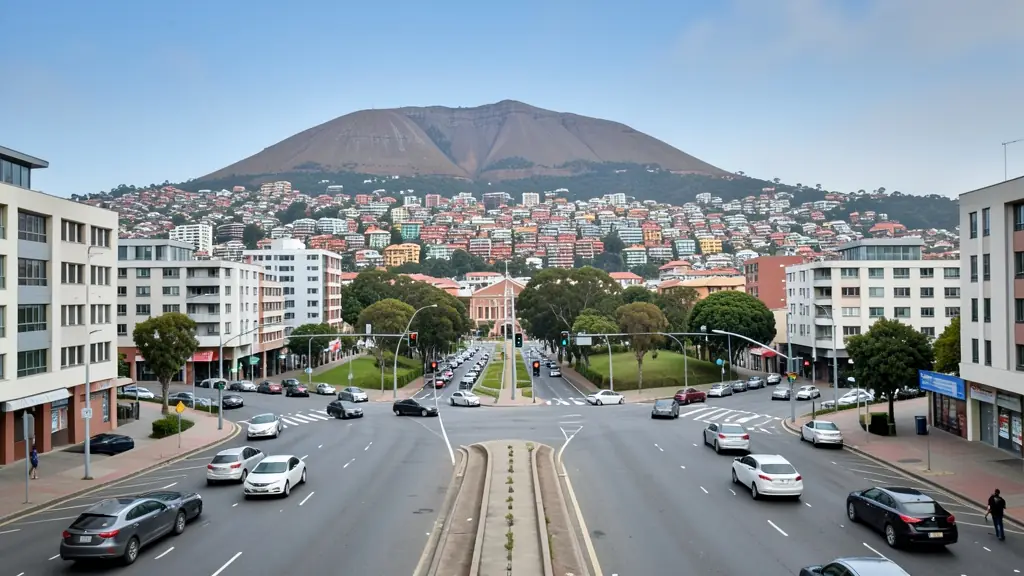
Whether it is one granny flat or a whole development, our free service makes it easy to price a traffic impact assessment in Cape Town. Your request goes to an engineer serving Cape Town and nearby areas of Western Cape.
Traffic Impact Assessments in Cape Town
Need a traffic impact assessment in Cape Town? Tell traffic engineers who work in Cape Town and around Western Cape what you plan to build, how many units or square metres, the roads the site fronts on and where you want the access, so they can scope the study and quote.
New to this? Read the traffic impact assessments guide for the steps and the points worth checking before you appoint anyone.
What to know locally in Cape Town
Heritage Western Cape and the City's heritage section cover the Bo-Kaap, the City Bowl, Woodstock and much of the older southern suburbs, so heritage practitioners often join projects. Mountain slopes, wetlands, the coast and the Liesbeek and Black rivers bring environmental checks. Traffic studies matter on the M3, the N1 and Voortrekker Road. Ratepayers' associations object often and know the process well, so a strong motivation helps.
Land use and development in Cape Town
Few cities in South Africa have a planning system as detailed as Cape Town's. The City of Cape Town decides applications under its Municipal Planning By-law and the Development Management Scheme, inside the provincial framework of LUPA. Heritage protection overlay zones cover the Bo-Kaap, the City Bowl, parts of Woodstock and many older suburbs. The mountain, the coast and wetlands limit where building may go. The City supports densification along transport corridors and in places such as Woodstock, Salt River and Claremont, and its scheme now allows additional dwelling units on many single residential erven more readily than before. Industrial areas in Epping, Montague Gardens and Paarden Eiland add site plans and change of use.
Typical requests for a traffic impact assessment in the area come from:
- Homeowners: rarely needed, but sometimes asked for when a house becomes a guest house or creche
- Buyers, sellers, agents and conveyancers: checking whether a site can get the access a planned development needs
- Architects, plan drawers and builders: access and parking requirements that shape the site layout
Local tips for Cape Town
Common here: heritage overlay permits, additional dwelling units and corridor densification. Ask each planner about this: ask whether a heritage overlay zone applies to the erf before you design anything. Where they work from: planners and architects in the CBD, Woodstock, Claremont and Century City.
Around Cape Town the largest group asking is homeowners, which usually means rarely needed, but sometimes asked for when a house becomes a guest house or creche. Before you agree to anything: national guidelines, COTO TMH 16. Getting a planner there: local planners cover the metro, from Century City to the southern suburbs.
Service area: Cape Town and surrounds
Requests from Cape Town go to professionals who already serve Century City, Woodstock, Epping, Montague Gardens, Paarden Eiland, Claremont, Salt River and the rest of the area. Say whether you want advice and a fee proposal first, or the full application.