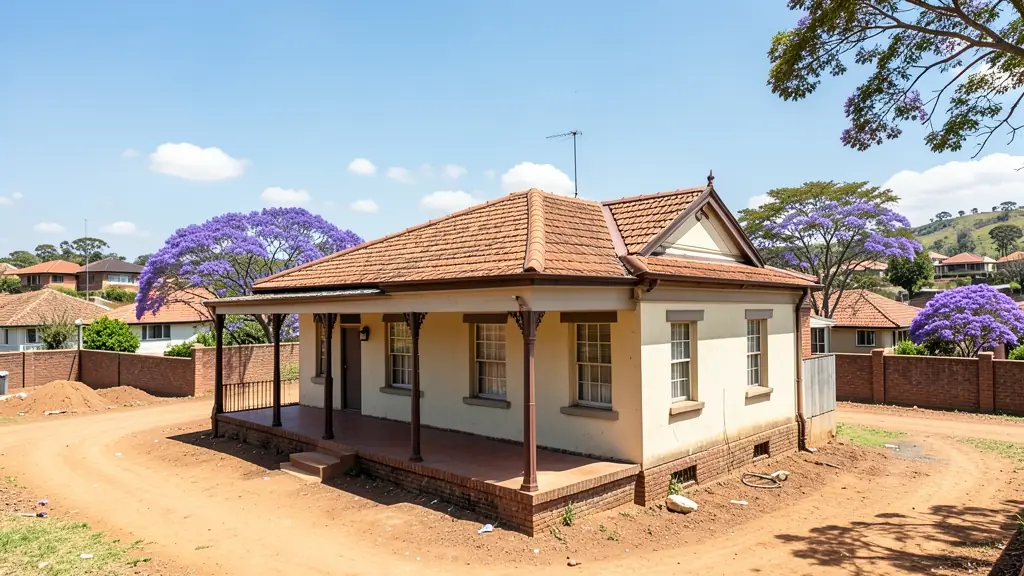
A consultant quotes better when they know the property, what is planned and what the municipality has already asked for. Send one request with the details and we pass it to heritage practitioners and architects working in towns and cities across Gauteng.
Heritage Permits and Impact Assessments in Gauteng
Altering an older building or developing a larger site in Gauteng? Tell heritage practitioners and planners who work in Gauteng and around Gauteng the age of the building, what you plan to change or build and the site size, so they can check sections 34 and 38 and quote.
New to this? Read the heritage permits and impact assessments guide for the steps and the points worth checking before you appoint anyone.
Gauteng notes on specialist studies & advice
Older parts of Johannesburg such as Parktown, Melville and Houghton have many buildings over 60 years old, so <a href="/heritage-applications/">heritage permits</a> from the provincial authority come up often. Ridges and wetlands around the Klip and Jukskei rivers trigger environmental studies, and townhouse schemes along William Nicol Drive or Atterbury Road often need a traffic study. Residents' associations in the northern suburbs are organised and object regularly, so a sound motivation matters.
Gauteng: how the area is changing
Gauteng is the smallest province by area and the busiest by far for land use applications. Three metros share it: the City of Johannesburg, the City of Tshwane and the City of Ekurhuleni, each with its own land use scheme, planning by-law and tribunal, while Mogale City, Emfuleni, Midvaal and the other local municipalities of the West Rand and Sedibeng run their own. The pressure comes from two directions at once. Older suburbs with big erven, such as Bryanston, Waterkloof and Bedfordview, are being split, rezoned for townhouses and fitted with second dwellings, while smallholdings in Muldersdrift, Kameeldrift and the Benoni plots are turned into townships and estates. Along the Rea Vaya and Gautrain routes the metros encourage higher density.
Typical requests for a heritage permit or impact assessment in the area come from:
- Homeowners: a permit to extend, alter or partly demolish a house older than 60 years
- Developers: a section 38 notice and heritage impact assessment for a larger site or rezoning
- Buyers, sellers, agents and conveyancers: finding out whether an old house can be extended or replaced before buying it
Local tips for Gauteng
Common here: townhouse rezonings, subdivisions of big erven and as-built plans for sales. Ask each planner about this: ask which metro scheme applies and whether the title deed limits the erf to one dwelling. Where they work from: sandton, Midrand, Centurion, Pretoria East, Bedfordview and Kempton Park.
Jobs vary: one old house to a large development site. Here, homeowners lead the requests, typically for a permit to extend, alter or partly demolish a house older than 60 years. One local point to raise: planners and plan drawers in every metro, with site visits across the province.
Service area: Gauteng and surrounds
Planners and consultants on our network work throughout Gauteng, including Johannesburg, Pretoria, Ekurhuleni, Sedibeng, West Rand, Midrand, Centurion. For farms and small towns, ask how site visits and travel are charged.