Distinguishing town planning from urban design
Definitions and scope: planning vs design
In South Africa’s rapidly expanding cities, the difference between town planning vs urban design can determine how smoothly a neighbourhood breathes, how safely people move, and how quickly investment lands. It’s about scale and intent: policy and land-use versus street-level experience.
Definitions and scope: town planning sits at the policy end—zoning, land use, infrastructure networks, and regulatory frameworks that guide growth over decades. Urban design works at the human scale—how streets, blocks, and public spaces feel when walked or sat in, and how the built form supports daily life. In practice, planning provides the rules; design fills the spaces between them.
Key distinctions include:
- Focus and time horizon
- Tools and outputs
- Stakeholders and governance
- Outcome measures
In South Africa, aligning town planning vs urban design with community needs and municipal budgets yields more livable spaces.
Core objectives and outcomes
“Cities have the capability of providing something for everybody, only because, and only when, people are able to get out of their cars and walk,” Jane Jacobs asserted — a provocation that orients our understanding of urban life and design.
In the debate over town planning vs urban design, the core objectives diverge yet align; planning tends toward policy clarity, zoning, and long-term stability, while design champions human-scale experiences, legibility, and daily comfort.
- Livability through walkability, shading, and place-making
- Safety and inclusive access for all users
- Investment readiness and resilient infrastructure
In South Africa, aligning these outcomes with community needs and municipal budgets yields spaces that breathe and endure.
Process and timeline differences
Urban life moves in the tempo of streets, not just blueprints! In South Africa, municipal budgets run on five-year cycles, shaping where streets are widened, and where spaces invite lingering rather than drive-through speed.
Distinguishing town planning vs urban design in terms of process and timeline differences reveals a practical truth: planning codifies policy and land use, while design translates ideas into legible, human-scale environments. The phrase town planning vs urban design sits at the hinge of governance and craft.
- Planning approvals align with zoning reviews and infrastructure funding
- Design timelines compress public realm work into deliverable demonstrations
- Engagement windows and rezoning motions dictate pacing
When these threads are read together, South African spaces breathe—projects that respect budgets, communities, and the daily rhythm of walking.
Key disciplines involved
Streets are the city’s heartbeat, and the rhythm tells you more than blueprints ever could! Distinguishing town planning vs urban design reveals how policy and place meet at ground level, shaping streets that invite footfall rather than fast car speeds.
Key disciplines involved in distinguishing town planning vs urban design span policy, place-making, and technical craft.
- Architecture
- Landscape architecture
- Transport planning
- Policy and zoning strategy
- Public engagement and community design feedback
In the SA context, professionals synchronize master planning with street-level outcomes, balancing budgets and community input to craft spaces people actually use.
Historical context and evolution
Origins of town planning
More than half the world’s population now lives in cities, and the way those streets are laid out shapes daily life. The origins of town planning lie in simple, practical aims: clean water, safe streets, and orderly markets. Across centuries, efforts to tame growth produced enduring patterns that still influence town planning vs urban design today. That matters!
To illustrate the arc of the story, consider a few milestones:
- Ancient grids and forum-centered layouts that organized flow and trade
- Medieval towns built around markets, cathedrals, and defensive walls
- Industrial-age zoning and public health reforms that reshaped density
Across South Africa, that layered heritage meets 21st‑century needs. From legacy suburbs to new redevelopment corridors, planners balance history with mobility, housing, and public space.
Evolution of urban design thinking
Cities now cradle more than half the world’s people, and street design shapes safety and opportunity. The tension between town planning vs urban design isn’t a relic; it’s about who writes the rules and who benefits from space. From ancient grids to market-driven medieval towns and industrial reforms, patterns still echo. Across South Africa, legacies meet 21st-century needs for mobility, housing, and public space!
- Grid patterns that directed movement and water flow
- Market-centered layouts anchored by churches and gates
- Density controls and sanitation reforms that transformed living conditions
Urban design thinking has shifted from strict separation of uses to a people-first approach—streets as places, shade, and climate resilience. In South Africa, redevelopment corridors test this shift, and I see it in every project, blending inherited form with new housing and public realms. The dialogue between town planning vs urban design remains visible in policy and life.
Policy shifts and regulatory changes
Urban living now accounts for more than half of South Africa’s population, and the pace shows no sign of slowing. The tension between town planning vs urban design isn’t a relic; it’s the rulebook behind every street, square, and transit corridor.
Historically, planners leaned on rigid grids, market-led cores, and sanitation-era reforms that reshaped crowded conditions—from ancient grids to colonial towns. In South Africa, post-1994 reforms reoriented thinking toward inclusive public spaces and mobility, culminating in SPLUMA and related statutes to balance growth with equity.
Policy shifts have introduced new regulatory levers that influence both sides of the debate.
- National Spatial Planning Act and SPLUMA principles
- Transit-oriented development and public-space mandates
- Redevelopment corridors and inclusive zoning pilots
These changes push town planning vs urban design toward integrated, people-first streets.
In redevelopment corridors and retrofit programs, regulators test policy against on-the-ground realities, blending inherited form with new housing and public realms.
Technology and data shaping practice
Historical context and evolution trace a stubborn thread from colonial grids to modern transit ambitions. In South Africa, towns grew denser and social needs reshaped the dialogue around town planning vs urban design as a living practice, not a rigid rule. Old layouts whisper about markets, wards, and walls, while today’s streets aim for accessibility, safety, and everyday delight.
- GIS-driven land-use analyses
- City Information Modeling for urban spaces
- sensor networks and crowdsourced feedback
Technology and data are the compass guiding practice, turning intuition into evidence and scenarios into action. In this light, the two strands converge—memory and mobility, design intent and regulatory reality—each informing the other’s choices and pace within South Africa’s evolving cities. town planning vs urban design remains a living debate, reshaping streets into spaces people reach with purpose.
Global vs local development patterns
Cities are a stage for memory and movement. “Cities have the capability of providing something for everybody, only because, and only when, they are built for everybody,” Jane Jacobs observed—and the line still bites. Global development patterns parade in, but South Africa’s streets insist on a different tempo: denser cores, mixed use, and streets that invite each passerby to linger rather than hurry. In this light, town planning vs urban design is not a duel but a conversation, where memory, mobility, and policy politely negotiate the pace of change!
Global templates clash with local dialects, especially in cities sketched by diverse histories. Consider these everyday implications in South Africa:
- Topography-informed grids and climate-aware spacing
- Walkable blocks nurturing local commerce and social life
- Transit corridors weaving heritage routes with modern connectivity
Thus, memory and mobility thread a shared practice, shaping spaces people reach with intention rather than chance.
Roles, responsibilities, and professionals
Planners vs designers: what each does
Cities are stories written in streets, and in South Africa those stories pulse with possibility. A striking 40% of urban land sits underutilized, patiently waiting for planners and designers to reimagine it. Understanding town planning vs urban design helps unlock that promise and shape places people love to inhabit.
- Planners shape policy, land use, zoning, and infrastructure strategies.
- Designers craft the public realm, movement networks, and spatial atmosphere.
- Professionals collaborate with communities, engineers, and developers to turn plans into places.
When these roles align, policy translates into walkable streets, safer corridors, and vibrant public spaces that communities in Cape Town, Durban, and beyond can enjoy.
In the South African context, this teamwork—spanning municipal planners, transport specialists, landscape designers, and community advocates—transforms plans into tangible places.
Cross-disciplinary collaboration
Roles across town planning vs urban design sit at the crossroads of policy and place. Planners steer zoning, infrastructure strategies, and regulatory frameworks; urban designers shape the public realm, movement networks, and spatial atmosphere.
Responsibilities hinge on solid data, transparent briefs, and authentic community input. Cross-disciplinary collaboration is the engine:
- municipal planners and transport specialists
- landscape designers and engineers
- community advocates and developers
In South Africa, this teamwork transforms plans into places people actually enjoy moving through and inhabiting. When town planning vs urban design syncs, resilience, equity, and vitality follow, turning policy into practical, loved spaces.
Public sector, private sector, and community roles
Two-thirds of South Africans live in urban spaces, a living statistic that hums like a distant organ as streets bend to policy and design. In the crucible of town planning vs urban design, roles crystallize: policy makers frame the rules; designers breathe atmosphere into the public realm.
Public sector, private sector, and community each bear responsibilities, yet share a stubborn goal: places that endure and invite. The following roles illuminate how the triad operates:
- Public sector: municipal planners, transport authorities, and regulatory bodies
- Private sector: developers, engineers, and landscape teams
- Community: residents, NGOs, and local forums
In practice, clarity, transparent briefs, and authentic input shape outcomes. Public sector stewards zoning and infrastructure; private firms translate policy into streets and spaces; communities monitor delivery and celebrate inclusive places. When town planning vs urban design align, resilience, equity, and vitality bloom.
Skills and qualifications that matter
Where space meets policy, roles sharpen in SA cities. In the town planning vs urban design dialogue, success rests on clear briefs, transparent processes, and authentic community input. Public sector planners set zoning and infrastructure goals; private firms translate policy into streets and plazas; communities monitor delivery. When these roles align, places feel inclusive and resilient.
- Public sector planners: policy literacy, zoning frameworks, stakeholder engagement
- Developers and engineers: feasibility analysis, master planning, design coordination
- Urban designers: place-making, streetscape standards, accessibility and climate resilience
- Analysts and technologists: GIS, data visualization, transport modelling
Professionals in this space hold degrees in town planning, urban design, or related fields and seek registration with relevant bodies. The strongest teams blend policy discipline with human-scale craft—the heart of town planning vs urban design.
Practical frameworks, tools, and case studies
Master planning vs participatory design
More than two-thirds of South Africa’s population already lives in urban areas, a pressure that makes every street and public space feel consequential. In the dialogue around town planning vs urban design, practical frameworks matter—bridging policy aspiration with street-level reality.
Practical frameworks, tools, and case studies that travel well here include:
- Master planning with phased delivery
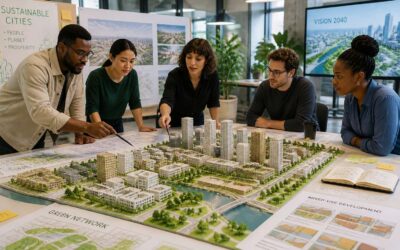
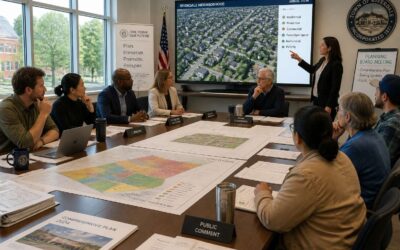
- Participatory design workshops and community co-creation
- Scenario planning and GIS-enabled decision support
- Performance metrics and ongoing monitoring
Case studies—from Cape Town’s densification corridors to Durban’s coastal precincts—show how long horizons and local voices can coexist. Master planning provides structure; participatory design breathes life into streets, squares, and transit, turning imagined futures into tangible places.
In this space, the city becomes a living conversation, where policy text meets pavement texture.
Policy frameworks and guidelines
Two-thirds of South Africa’s population now lives in urban areas, and every street corner doubles as a policy memo with a coffee stain. In the debate about town planning vs urban design, practical frameworks are the gears that turn aspiration into place.
Practical tools that travel well here include:
- Phased master planning to align long horizons with on-the-ground delivery.
- Community co-creation sessions that embed local voices early.
- Scenario planning paired with GIS for decision support.
- Ongoing performance metrics and monitoring to keep projects accountable.
Policy frameworks and guidelines shape how these tools are deployed, guiding zoning, transit integration, and the balance between public space and private development. Case studies—Cape Town’s densification corridors and Durban’s coastal precincts—illustrate long horizons meeting local voices, turning plans into lived experience.
In this dialogue, the city becomes a living conversation where policy text meets pavement texture.
Case study: comparative project
Two-thirds of South Africa’s population now lives in urban areas, and the city breathes in glass and grit. Practical frameworks are the gears that turn aspiration into place. In the debate between town planning vs urban design, tools travel well: phased master planning, community co-creation sessions, scenario planning with GIS, and ongoing performance metrics.
- Phased master planning to align long horizons with on-the-ground delivery.
- Community co-creation sessions that embed local voices early.
- Scenario planning paired with GIS for decision support.
- Ongoing performance metrics and monitoring to keep projects accountable.
Case study: comparative project across Cape Town’s densification corridors and Durban’s coastal precincts shows how these tools translate policy into street life. Long horizons meet local voices; phasing delivers, co-creation informs, GIS-based models reveal, and performance dashboards hold the project to account. This is the living conversation of town planning vs urban design.
Measuring success: indicators and metrics
Two-thirds of South Africa’s population now lives in urban spaces, a charged statistic that presses town planning vs urban design into the daylight. Practical frameworks turn hazy aspiration into legible streets: ordered sequencing, inclusive dialogue, data-driven scenario work, and continuous performance checks. The dance between policy maps and street life becomes vivid when these tools hum in harmony.
Measuring success is a language in itself.
- Livability and social equity across neighborhoods
- Public realm usage, safety, and comfort
- Economic vitality and housing affordability
- Environmental resilience and climate responsiveness
- Delivery timeliness, cost control, and maintenance sustainability
Indicators become the compass guiding progress, as Cape Town’s densification corridors and Durban’s coastal precincts reveal in microcosm.

0 Comments