Modern Concepts in Town Planning and Urban Development
Urban Principles and Goals
“Cities have the capability of providing something for everybody, only because, and only when, they are built by everybody.” In South Africa, this belief travels the streets, turning opportunity and challenge into shared ground. I feel the tension and promise in every corner. Modern concepts in town planning invite us to watch more than facades!
The concept for town planning becomes a moral instrument, shaping housing, work, and public life into a coherent whole. Urban development seeks principles that balance density with dignity, mobility with accessibility, and nature with noise.
- People-first public spaces that invite everyday interaction
- Transit-oriented layouts that weave walking, cycling, and buses
- Climate-resilient design with green corridors and stormwater sense
These ideas reflect South Africa’s diverse urban fabric, inviting resilient, inclusive futures.
Spatial Design and Layout
Cities don’t just grow; they negotiate with us. A fresh line for our streets is clear: the best places emerge when people sketch them with daily routines. The concept for town planning in South Africa is evolving toward humane, human-scale design that respects local rhythms while inviting surprise.
Spatial logic becomes fluid: movement is a language, not a barrier. I picture nodes where pedestrian paths meet transit, pocket parks that double as rain gardens, and streets that host markets and gatherings.
- People-friendly public spaces
- Integrated, multi-modal transport links
- Green corridors and water-sensitive design
South Africa’s cities demand resilience wrapped in delight. In practice, dense cores sit beside airy parks, with rain gardens catching stormwater before it surprises us. This balance—between mobility, access, and nature—transforms spatial design and layout into a living blueprint, and the ideas stay central.
Planning Methods and Tools
Cities in South Africa are rethinking growth, and a striking 70% of urban residents say walkable cores shape daily life. The street is a stage, not a barrier, and the best districts emerge when people sketch them with routines. The concept for town planning favors humane, human-scale design.
Modern concepts embrace fluid spatial logic: streets become social spaces, not transport arteries. I picture nodes where pedestrians meet transit, pocket parks doubling as rain gardens, and markets spilling onto sidewalks at dusk, turning circulation into gathering!
Tools shaping this modern agenda include:
- GIS-driven mapping and data-informed zoning
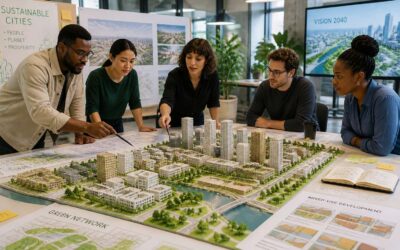
- Participatory design workshops with residents and traders
- Scenario planning for climate, transport, and housing pressures
It’s a living blueprint that invites curiosity, not conformity.
Governance, Policy, and Implementation
Cities are reconfiguring themselves, and the street answers with life. A 70% share of urban residents says walkable cores shape daily life, a statistic that refuses to fade. This concept for town planning reframes governance, policy, and implementation as humane, iterative processes—not distant blueprints. The street becomes a stage where routines, markets, and transit converge, and districts emerge from people sketching them with everyday rhythms.
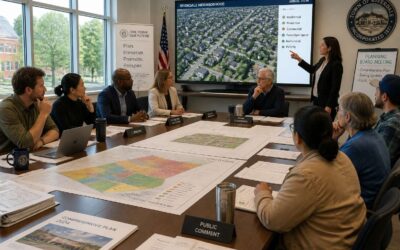
- Participatory budgeting and open oversight that place residents at the table
- Data-informed policy with measurable milestones and transparent review
- Pilot districts and phased rollouts to test ideas before wider adoption
From here, governance feels like stewardship rather than command; policy becomes a living script that adapts to climate, transport, and housing pressures. South African cities, with their unique councils and communities, can choreograph development through dialogue, shared risk, and local pride. The result is a humane urban fabric that breathes, resists stagnation, and invites curiosity!
Resilience, Sustainability, and Future-Proofing
Cities are learning that resilience is built in the details, not in distant blueprints. A grandmother in a small town once told me, “The street is our living room.” That sentiment anchors this concept for town planning: places that bend toward people, climate realities, and everyday rhythms. In South Africa, this approach invites a patient, human pace for growth—cities that listen, adapt, and welcome curiosity.
Modern concepts in urban development lean into resilience, sustainability, and future-proofing, weaving hands-on practices into daily life. Key threads in this paradigm include:
- Embracing heat-ready, durable materials and passive cooling
- Water stewardship and drought-tolerant landscaping
- Transit-oriented, walkable streets that double as flexible community spaces
- Community-led data collection and transparent, iterative feedback loops
Viewed this way, the skyline becomes a living organism that breathes with the people it serves—shaped by climate and housing pressures, guided by stewardship rather than command. This frame invites South African towns to choreograph development with shared pride, local wisdom, and open hearts.

0 Comments