Core Technical Expertise for Urban Planning
Spatial Analysis and GIS Proficiency
Every streetlight in Johannesburg has coordinates. Your town planner skills should too. Spatial analysis is now a core requirement for credible urban decision making. Without GIS proficiency, you work with incomplete information, hoping the zoning aligns with reality.
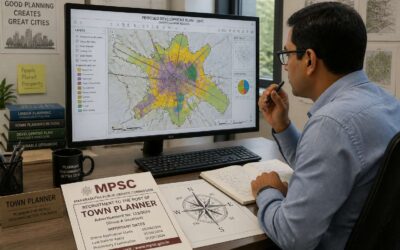
Core technical expertise now demands more than reading a cadastral plan. It requires manipulating layers, querying attribute tables, and interpreting land use patterns with precision. A competent planner uses GIS to test scenarios, from flood risk to transit access, before construction begins. South African municipalities increasingly expect this fluency in their recruitment processes.
- Overlay analysis for environmental constraints
- Buffer generation around sensitive sites
- Spatial statistics for demographic trends
These are the tools that distinguish a competent planner from one who files maps. Master them, and your town planner skills become indispensable.
Urban Design and Master Planning Fundamentals
By 2050, nearly 80% of South Africans will live in cities. That density brings technical problems into focus. Town planner skills now hinge on urban design fundamentals: block dimensions, street widths, building setbacks, and how public space holds the whole arrangement together. These parameters shape the daily experience of a neighbourhood long after the project team has moved on.
Master planning fundamentals operate at a different scale. They stretch town planner skills beyond the design stage, requiring sequencing infrastructure, phasing development, and aligning bulk services with growth projections. I have watched schemes collapse because the phasing plan ignored servicing timelines. The same principle applies to urban design elements like street grids and public space networks, where early decisions lock in outcomes for decades.
Core technical expertise also means reading the documents that constrain everything. Typical township establishment applications demand:
- Engineering services reports
- Environmental impact assessments
- Bulk infrastructure cost estimates
Environmental Impact Assessment Techniques
South Africa’s biodiversity makes environmental impact assessment a non-negotiable pillar of town planner skills. This process is not a bureaucratic hurdle; it is a fundamental tool for understanding what a piece of land can actually support. The core of the work happens through baseline studies, where planners document the existing ecological conditions before any design begins. These studies feed into a rigorous technical evaluation of potential harm, covering everything from water tables to protected plant species.
A town planner must interpret the specialist reports that govern development. This means understanding the language of botanists, hydrologists, and heritage consultants. The value lies in synthesising these findings into a practical development plan that avoids high-risk zones. When done correctly, the assessment guides the placement of infrastructure and the design of drainage systems. Town planner skills here are about anticipating long-term consequences, not just meeting statutory requirements.
The discipline requires a methodical approach to evidence, often involving public consultation and specialist studies. Here is how the phases typically unfold:
1. Screening to determine the level of assessment required.
2. Scoping to identify the key environmental issues and alternatives.
3. Drafting the environmental impact report for comment.
4. Integrating the findings into the final layout plan.
Ultimately, this expertise protects the project from legal challenge and the environment from irreversible damage. It demands a professional who can sequence the technical work and communicate the risk to stakeholders. A failure to master this area leaves the entire township establishment exposed, making this one of the most consequential responsibilities in the field.
Strategic Thinking and Analytical Abilities
Data-Driven Decision Making in Planning
Strategic thinking separates a good town planner from a great one. In South Africa, where urban growth collides with infrastructure limits, this ability is non-negotiable. Analytical abilities turn messy datasets into clear priorities. Data-driven decision making in planning means using population projections, traffic counts, and housing demand figures to guide every choice. I have seen plans fail because intuition replaced evidence.
A robust approach requires checking assumptions against real-world numbers. This is where town planner skills truly shine. Common tools include:
– demand forecasting models
– cost benefit analysis
– scenario testing
Each method forces clarity. Strategic thinking also involves timing. Knowing when to propose a new development versus when to hold back. The best planners read trends, not just maps. Their analytical abilities translate raw statistics into livable spaces. Data-driven decision making in planning transforms uncertainty into actionable frameworks. These town planner skills matter most when budgets tighten and stakeholders disagree.
Scenario Planning and Future Forecasting
By 2050, South Africa’s urban population will grow by millions, yet no forecast arrives with certainty attached. Strategic thinking and analytical abilities require planners to construct multiple futures rather than predict a single outcome. Scenario planning pushes beyond linear projections. It asks what happens if rainfall patterns shift, if manufacturing relocates, if housing policy changes.
Future forecasting tools, such as cross-impact matrices and trend extrapolation, quantify these unknowns. They help planners assign probabilities to different trajectories. In my experience, the strongest town planner skills emerge when treating the future as a range of possibilities instead of a fixed destination.
Consider what scenario testing involves:
- identifying critical uncertainties in regional growth
- building alternative development pathways
- stress testing infrastructure capacity under each version
These town planner skills turn foresight into a practical framework for land use decisions. The future resists prediction, but it rewards preparation!
Policy Analysis and Critical Evaluation
Strategic thinking in planning is not abstract. It is the daily discipline of connecting policy choices to lived realities. When I analyse a municipal spatial framework, I look for contradictions between stated goals and budget allocations. This is where town planner skills separate surface-level reviews from genuine evaluation.
Critical evaluation demands specific methods:
- trace policy impacts across income groups
- check alignment with existing infrastructure
- test assumptions against historical trends
I have seen well-intentioned policies fail because no one asked these questions. The best plans emerge from rigorous analysis, not hopeful rhetoric. Strong evaluation also means revisiting past decisions with fresh evidence, especially when new data on migration or climate stress emerges.
Sustainability and Climate Adaptation Strategy
In 2018, Cape Town came within weeks of Day Zero. That near miss changed how I approach strategic decisions. Town planner skills now mean preparing for climates that do not exist yet.
Sustainability is the baseline, not an accessory. When I assess a coastal development, I trace the pathway of a storm surge. I ask whether the energy grid can handle a heatwave. I investigate soil stability after prolonged drought.
Climate adaptation requires specific analytical habits:
- map flood zones against future population growth
- calculate freshwater costs under repeated shortages
- test building materials against projected temperature ranges
These calculations keep communities standing when the environment shifts. The plans that endure are built on this analysis.
Communication and Stakeholder Collaboration
Public Consultation and Community Engagement
In South Africa, the Municipal Systems Act obligates every municipality to engage citizens in development planning. This legal foundation turns town planner skills into a daily exercise in listening.
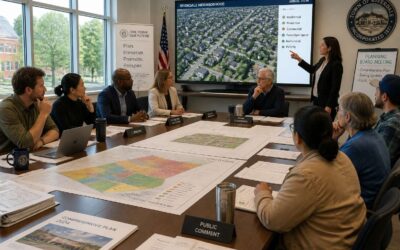
Public consultation is where technical proposals meet lived reality. I have sat in community halls where residents raised concerns about bulk infrastructure, street lighting, and affordable housing. Those sessions reshaped draft proposals in ways desk analysis never could. Stakeholder collaboration extends beyond public meetings. It involves diverse voices:
- Ward councillors
- Traditional authorities
- Ratepayer associations
- Informal settlement leaders
Each group carries distinct knowledge. The planner’s role is to synthesise that knowledge without favour. Effective engagement requires clear communication, manageable expectations, and honest feedback loops. These efforts reveal what a place genuinely needs. When residents see their input reflected in the final plan, trust grows, and that trust sustains long term development!
Negotiation and Conflict Resolution
Every development proposal carries hidden tensions. Zoning maps give an orderly impression, but disputes emerge when stakeholders face one another. I have entered rooms thick with distrust, where residents, developers, and municipal officials each spoke a different language of expectation. Negotiation begins with listening for what goes unsaid.
Conflict resolution demands patience and a steady spine. The planner reads the undercurrents of a community’s history. Today’s objection often carries the weight of yesterday’s betrayal. Stakeholder collaboration maps the invisible connections between parties, then binds them into agreements that hold under pressure.
Communication depends on specific techniques:
- Reframing technical jargon into plain language
- Separating emotional reactions from substantive demands
- Recording every agreement in clear, exact terms
These town planner skills transmute hostility into workable compromise. Successful negotiation does not silence opposition. It converts opposition into a collaborative force that sharpens the final plan. The room teaches what documents never will!
Report Writing and Technical Documentation
Report writing is where town planner skills either shine or dissolve. A development proposal lives or dies on the clarity of its supporting documentation. I have watched excellent schemes stall because the technical report read as a wall of dense acronyms and circular language.
Technical documentation must survive scrutiny from municipal reviewers, environmental assessors, and objectors who read every line for weakness. Each sentence carries legal weight. In South Africa, where land use decisions face public appeal, precision is survival!
Your documentation needs:
- A plain language executive summary that a councillor can digest in minutes
- Referenced sources that hold up under cross-examination
- Maps and diagrams that communicate without explanation
Think of the report as a witness for the proposal. It should answer objections before they form. Write it like your professional judgment depends on it, because it does.
Interpersonal Communication Across Disciplines
Town planning work summons order from the echo of competing voices. Engineers speak in calculations. Lawyers in precedent. Communities in memory and fear. The planner stands at the centre, translating silence and fury into something buildable.
I have learned that town planner skills include listening for what remains unsaid. A developer’s hesitation. A resident’s pause. These pauses carry the weight of future disputes.
Communication across disciplines demands:
- A shared vocabulary, built deliberately
- Patience for jargon spoken without malice
- The humility to ask clarifying questions
The meeting room holds its own history, and every stakeholder carries invisible burdens.
Presenting Complex Information to Diverse Audiences
In South Africa, a planning meeting may include municipal officials, land developers, and residents whose first languages differ from the documentation before them. Town planner skills include the ability to condense dense regulations and technical reports into plain language without losing legal precision. I have presented stormwater models to residents who needed to know only where water would flow, not the coefficient of friction. They wanted certainty. They deserved clarity.
One approach that works:
- Visual mapping that shows change over time
- Plain language summaries that accompany technical documents
- Structured question sessions where every voice receives a response
The measure of successful communication is not whether everyone understood everything, but whether each person left able to make an informed decision. When stakeholders grasp the trade-offs, they participate with greater confidence. This is where town planner skills in presenting complex information to diverse audiences matter most.
Project Management and Organisational Capabilities
Budgeting and Resource Allocation
Budgets translate a town’s ambitions into concrete, enforceable actions. They are the quiet arbiters of what gets built and what remains a concept on a slideshow. A planner who allocates funds without anticipating litigation, community resistance, or volatile material costs is setting the project up for failure before the first shovel breaks ground.
Effective project management in planning is more than schedules and milestones. It demands a candid appraisal of what is realistic. Every grant comes with reporting conditions. Every public works programme carries maintenance obligations. Balanced planning operates within these limits.
The practical skills required include:
– Asset lifecycle costing
– Grant funding administration
– Cash flow forecasting across financial years
– Stakeholder expectation management
– Procurement sequencing
In South African municipalities, this skillset is decisive. Years of deferred maintenance and contested budgets have left many infrastructure projects stalled. A planner who can sequence repairs, secure funding, and communicate trade-offs honestly is rare.
Within the broader suite of town planner skills, the ability to manage projects and allocate resources effectively stands apart. It requires an acceptance that every decision involves loss, and that good stewardship means choosing what to sacrifice.
Project Lifecycle Management and Scheduling
A project plan is a schedule of commitments. The project lifecycle turns those commitments into a sequence of decisions, each dependent on the last. A planner who cannot track dependencies, who mistakes activity for progress, will watch deadlines slip and communities grow restless. In South Africa, where service delivery protests often flare over delayed projects, the cost of poor scheduling is measured in trust as much as rands.
Town planner skills in this domain rest on understanding dependencies:
- geotechnical surveys before foundation design
- procurement before construction
- occupancy audits before handover
Organisational capability matters too. Municipalities lose institutional memory when staff rotate. The planner must document assumptions, record deviations, and keep the sequence legible to the next person holding the file. Without these town planner skills, project lifecycle management fractures.
Risk Assessment and Mitigation Planning
It is a peculiar habit of the profession to treat the project plan as a sacred text, while ignoring the frail human machinery that must execute it. In South Africa, the gap between a world class schedule and its delivery is often filled with the ghosts of departed colleagues. When a senior official resigns, they take with them the subtle knowledge of why certain approvals take six weeks, or which contractor is structurally incapable of meeting a deadline. This loss is a risk, and it is a risk we rarely quantify on a register.
Consider the consequences of assuming the organisation will behave as the Gantt chart implies. If the procurement unit is understaffed, the most elegant sequence of milestones collapses. The town planner skills required here are not technical, they are diagnostic. You must look at the capability map of your municipality, not just the timeline. Where are the bottlenecks in human capacity? Who holds the unofficial veto over land use decisions? These are the variables that dictate whether a project stalls or proceeds.
A brief list of risks that frequently escape the formal assessment:
– Succession gaps in critical technical roles.
– The loss of tacit knowledge during staff rotation.
– Misalignment between the project timeline and the municipal budget cycle.
– External stakeholders who approve matters according to political, not project, calendars.
Mitigation is less about complex software and more about institutional hygiene. It involves building redundancy into roles, documenting the undocumented, and creating a culture where asking for help is not seen as incompetence. Planners often perceive diligence as a personal virtue, but it must become an organisational characteristic. If the plan lives only in one person’s head, the plan is not a plan, it is a memory. The ability to embed resilience into the system, to make the project function despite the departure of a single official, is the true measure of town planner skills in this domain. The technical work is meaningless if the administrative body cannot sustain it.
Legal, Regulatory and Policy Proficiency
Understanding Zoning and Land-Use Legislation
South Africa’s urban landscape is a palimpsest of legislative layers, where a single property transfer can unravel decades of historical zoning decisions. The statutory instruments governing land use are not abstract legalities; they are the operational bedrock for any practitioner. A planner who misreads a zoning scheme or misinterprets a development tribunal ruling can stall a project for years, incurring significant financial losses.
Understanding this legislative labyrinth requires more than a rudimentary familiarity with municipal bylaws. Effective town planner skills in this domain involve the precise interpretation of a municipality’s Spatial Development Framework (SDF) and the city’s zoning map. This knowledge allows you to anticipate objections, structure applications that satisfy legal requirements on the first submission, and guide developers through the often opaque processes of the provincial planning authority. Without this acumen, the most elegant design remains a static drawing.
Navigating these frameworks involves constant vigilance over procedural compliance. A robust proficiency hinges on:
1. Reading and interpreting the precise wording of a Land Use Scheme to identify permissible uses.
2. Auditing a site’s title deed conditions for restrictive servitudes or historic clauses.
3. Preparing consolidated applications for rezoning or departures that align with the municipal planning tribunal’s latest directives.
The statutory language is unforgiving, and ambiguity is a luxury you cannot afford. Ultimately, this legal literacy transforms a proposal from a conceptual ambition into a defensible, lawful reality. It protects the public interest while unlocking development potential, making it a non-negotiable component of your professional arsenal.
Navigating Planning Permission Procedures
In South Africa, the difference between an approved development and a stalled one often comes down to a single missed deadline. The procedural requirements for planning permission shift between municipalities, and each authority interprets provincial legislation through its own internal rules. Even seasoned developers can lose months to a technicality that a careful planner would have flagged in advance.
This is where town planner skills become decisive. Knowing which documents to submit, when to trigger a formal response, and how to frame a pre-application consultation can save a project from administrative purgatory. I have watched applications stall over a single overlooked clause.
The practical sequence follows a familiar rhythm:
- Submitting a pre-application enquiry to the local authority.
- Aligning the proposal with the municipal SDF and IDP.
- Tracking public participation timelines with precision.
- Responding to tribunal queries before the deadline lapses.
Each step carries specific risks that only hands-on experience reveals.
Heritage and Conservation Regulations
South Africa’s heritage regulations overlap and sometimes contradict each other. The National Heritage Resources Act protects structures that municipalities may not have mapped yet. A site that appears unremarkable during a survey can carry a conservation overlay that nobody flagged at the pre-application stage.
Town planner skills determine whether a project confronts heritage objections late or integrates them into the original design. I have watched applications collapse because a demolition permit was obtained before a heritage impact assessment was even commissioned. The legal weight of a heritage register is absolute, and it does not bend for commercial timelines.
Building Codes and Compliance Standards
In South Africa, a single missed clause in SANS 10400 can stall a project for months. Town planner skills in legal and regulatory proficiency go beyond knowing zoning schemes. They require reading the National Building Regulations alongside municipal bylaws, which often demand different interpretations of the same structure.
Compliance is not a checklist. It is a design constraint that shapes massing, fire safety, and accessibility. Planners must flag conflicts early. The practical work involves:
- Checking development proposals against SANS 10400 parts A to X
- Aligning building plan submissions with local authority requirements
- Tracking amendments to municipal planning bylaws
Each version of a plan that skips compliance review costs time and money. The planner who reads the code as a design tool, not a bureaucratic hurdle, keeps projects viable.
Environmental Law and Regulatory Frameworks
Environmental law in South Africa is a layered field where NEMA anchors the process, yet never operates alone. The National Water Act, NEM:BA, and provincial ordinances all apply to the same parcel of land. A town planner skills set must include knowing when an EIA is triggered and when it is not. That judgement comes from reading the 2014 EIA regulations alongside the listing notices, then cross checking those against the municipal IDP.
The practical work tracks a sequence:
- Environmental authorisation triggers are mapped against the development timetable.
- Freshwater and wetland buffers are verified before the site layout is fixed.
- Water use licensing under Section 21 of the National Water Act runs in parallel with zoning approval.
These checks shape the yield as much as the approval timeline. A town planner skills framework that treats environmental law as a design parameter, rather than a bureaucratic gate, keeps projects viable.
Public Inquiries and Appeals Processes
One objection filed late in the appeal window can halt a project that took two years to design. In South Africa, appeals often land before the MEC or a provincial appeal tribunal, where procedural fairness matters as much as the merits of the case. Town planner skills must include preparing appeal documentation that withstands legal scrutiny.
Consider what happens when a neighbouring property owner objects to a development. In my experience, the planner must respond with technical evidence, not opinions. This involves coordinating with attorneys, structuring submissions, and managing timelines. These town planner skills directly shape the appeal outcome.
The core tasks include:
- Interpreting appeal regulations under the relevant provincial ordinance
- Drafting responding statements that address each objection point
- Liaising between the developer, the municipality, and the appeal authority
Missing a deadline here can undo months of work.
Leadership, Ethics and Career Development
Team Leadership and Mentoring
In South Africa, roughly 40 percent of registered planners are over 50. The profession is about to lose a generation of institutional memory. Professional wisdom now hinges on how effectively veterans transfer their knowledge before they retire to garden estates.
Team leadership means tolerating the junior who asks why we still use apartheid era zoning maps. It means explaining, without eye rolling, that ethics committees exist for good reason. Consider the developer who offers a site visit at a game lodge. A strong leader spots the sop and redirects the conversation.
Mentoring works when it is structured. A monthly session covers:
– How to handle pressure from elected officials
– When to document a verbal instruction
– How to decline a gift without causing offence
These conversations build town planner skills that no software package can teach.
Ethical Judgment and Professional Integrity
Town planner skills face their true test in the quiet moments. The tender that arrives with a suspiciously generous budget. The council official suggesting a faster route through zoning approvals. Integrity is not a policy, it is a habit.
Ethical judgment means noticing the pattern before it becomes a problem. A bribe rarely arrives labelled as such. It arrives as a sponsored workshop, an upgraded hotel room, a friendly favour. I have watched a solid career unravel over a single accepted gift.
Consider the checks that keep a career clean:
- Declining hospitality that exceeds a modest threshold
- Recording verbal instructions from officials in writing
- Declaring any personal interest in a project before discussion begins
These habits carry more weight than any technical ability. One compromised decision follows a planner for decades, and younger colleagues are always watching.
Staying Current with Planning Research and Trends
The profession does not forgive stillness. A town planner who rests on accumulated knowledge will be outpaced, particularly in South Africa where legislative reform arrives with unsettling frequency. Staying current with planning research and trends is survival!
Career development demands a certain ruthlessness. The planner who attends every conference but never questions their own assumptions gains nothing. Ethical leadership in this field means acknowledging what you do not yet know. I have seen careers end from the arrogance of pretending otherwise.
The habits that keep a practitioner relevant are seldom spectacular:
- Reading judgment summaries from the Supreme Court of Appeal
- Tracking municipal boundary amendments before they become headlines
- Engaging with academic journals on climate adaptation
- Attending local ward committee meetings unannounced
These town planner skills are quiet, unglamorous, and absolutely essential. The leaders who endure are those who treat their own ignorance as a solvable problem. Refreshing your town planner skills is an ethical act.
Adaptability and Continuous Professional Development
Career adaptability in planning is less about reinvention and more about deliberate calibration. The planner who treats ethics as a checklist item will find themselves blindsided when a municipal client demands a rezoning outcome that bends precedent. South African planning practice tests integrity in small increments long before it tests it in dramatic fashion.
The town planner skills that sustain careers are tied to continuous professional development with intent. I have watched colleagues accumulate CPD points without absorbing any underlying substance. That is not development. That is administrative compliance.
Pairing every training session with a live problem in a current portfolio changes the value of the exercise. The question of how new knowledge alters the next submission forces a planner to confront the gap between theory and municipal reality. Ethical adaptability means changing course when evidence demands it, even if that unsettles an earlier position. Town planner skills strengthen when that willingness is tested in real submissions.


0 Comments