Urban Development Challenges in Rajasthan
Rapid Urbanization Trends and Population Growth
Rajasthan’s urban landscape is undergoing a seismic shift, with the state’s urban population projected to account for nearly 35% of its total demography within the next decade. This surge strains the skeletal infrastructure of cities like Jaipur, Jodhpur, and Udaipur, where heritage precincts collide with the demand for modern transit and housing. The incremental creep of peri-urban zones is particularly problematic, as these areas lack the fiscal capacity to deliver essential services, creating a patchwork of development that is difficult to manage retroactively.
The pressure points of this rapid urbanization are becoming more defined as migration patterns shift. The challenges manifest in specific, tangible ways that demand immediate attention from any town planner rajasthan.
– Water stress in urban aquifers due to over-extraction and inadequate recharge zones.
– Proliferation of informal settlements on the urban fringe, often on flood-prone or ecologically sensitive land.
– A severe deficit in affordable housing, pushing lower-income groups further from economic centers.
– Congestion in core city areas where the road network cannot be expanded without damaging heritage assets.
These factors create a complex matrix for spatial strategy. While the state has introduced policies for smart city missions, the implementation often lags due to land titling ambiguities and a shortage of skilled municipal staff. The consequence is a reactive approach, where planning follows crises rather than mitigating them in advance.
I have observed that the real friction lies in the disconnect between master plans and ground-level realities. A town planner rajasthan must navigate a bureaucratic labyrinth while negotiating with local political interests, a task that often dilutes the efficacy of long-term spatial vision. Without a drastic overhaul of how data is used for predictive modeling, the gap between population growth and infrastructural readiness will continue to widen. The challenge is not just about drawing maps, but about sequencing investments so that the most vulnerable cohorts are shielded from the brutalities of unplanned growth.
Historical City Planning and Heritage Preservation
Jaipur’s Pink City was never designed for the weight of modern traffic or the demands of a growing population. The walls that once protected a planned commercial hub now confine it, forcing any town planner rajasthan to consider how a living heritage site can evolve without erasing its soul. The challenge is preserving the intricate havelis and bazaars while making them functional for contemporary commerce and daily life.
The tension is acute when the sound of cultural preservation meets the noise of development. Retrofitting centuries old infrastructure for modern utilities, fire safety, and accessibility creates a specific set of constraints. The question of whether to reinforce a 17th century facade or rebuild it entirely with modern materials is a decision that often carries both engineering and political weight.
– Managing building height restrictions near monuments that conflict with real estate values.
– Protecting water harvesting structures that have become dumping grounds.
– Navigating the use of traditional materials versus modern, cheaper alternatives for restoration.
The economic reality is that these historic centers are still the economic engines for their districts. When administrative decisions prioritize tourist footfall over the daily needs of residents, the living culture of the city is diminished. A town planner rajasthan working within these zones must balance the preservation of tangible heritage with the intangible rights of the existing communities. The effort is a constant negotiation with the past and the future, one where the cost of failure is the loss of history itself.
Environmental Sustainability and Climate Resilience
Rajasthan’s urban centers face a cruel paradox: they are among the driest regions in India, yet they flood with alarming regularity during monsoon bursts. The traditional kunds and stepwells, which once served as community reservoirs, now collect plastic and silt, rendering them useless for recharging the aquifer below. A town planner rajasthan must confront this reality of engineered water scarcity, where the demand for groundwater far exceeds the natural recharge rate.
The built environment itself amplifies the heat. Concrete absorbs solar radiation throughout the day and releases it at night, creating an urban heat island effect that makes the 45 degree Celsius summers feel even more punishing. Public spaces designed for a cooler climate fail to provide refuge. The discipline now demands a focus on passive cooling, shaded corridors, and reflective materials that can mitigate the thermal load without relying on energy intensive air conditioning.
Key environmental hurdles for planning professionals include:
- Reforming the stormwater drainage systems to handle erratic, high intensity rainfall.
- Integrating waste to energy solutions for municipal solid waste that currently chokes landfill sites.
- Designing green belts that actually function as carbon sinks, not just decorative patches of grass.
The political will to invest in long term resilience often buckles under the pressure for immediate housing and commercial infrastructure. Yet every day spent delaying climate adaptation increases the future cost of disaster response. The role of a town planner rajasthan here is not merely technical; it is about forecasting the vulnerability of the most exposed populations and advocating for interventions before the crisis becomes a catastrophe.
Infrastructure Gaps and Basic Amenities
In Rajasthan’s expanding cities, basic municipal services often fail without warning. One day water flows from the tap, the next it does not. Sewerage systems, where they exist, date back decades. Every ward shares this daily uncertainty.
Electricity supply stutters during peak summer, and unplanned colonies lack paved roads. The gap between approved master plans and on-ground reality is enormous.
- Intermittent drinking water supply
- Untreated sewage discharge
- Inadequate street lighting
- Missing stormwater drains
Each deficiency compounds the next. Residents manage buckets, inverters, and private tankers just to get through the day. A town planner rajasthan cannot design for growth without first repairing this fragile network of services.
Land Use Conflicts and Regulatory Hurdles
In Rajasthan, a plot approved for a school can become a shopping arcade by the time the paperwork clears. Agricultural land on the city fringe becomes a plotted colony, while the revenue records still describe it as farmland. I have seen building permits take longer than the construction itself. The town planner rajasthan works with a master plan that is often older than the buildings it supposedly governs.
Approvals pass through multiple departments, each with its own stamp, fee, and interpretation. The delays feed an informal market where the illegal route is faster than the legal one. Common hurdles:
- Conflicting land records between revenue and municipal offices
- Heritage rules that clash with commercial density norms
- State orders that override local zoning decisions
For the town planner rajasthan, the real challenge is not drawing better maps. It is getting everyone to agree that the map means something.
Key Responsibilities of a Professional Town Planner
Zoning and Land Use Planning
Jaipur’s streets hold three centuries of commerce and chaos. Yet fewer than 15% of Rajasthan’s urban plots follow a formal land use plan. A town planner rajasthan closes that gap. Zoning and land use planning is their core mandate. They classify land into industrial, residential, agricultural, and commercial zones. They also set density limits, floor area ratios, and setback rules. This work directly shapes daily life. One wrong classification can starve a neighbourhood of green space or flood it with traffic.
Consider the responsibilities that define this role:
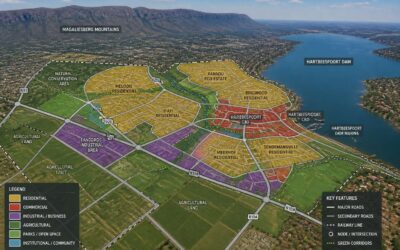
- Preparing and revising zoning maps based on soil quality and water availability.
- Issuing development permits that align with state regulations.
- Resolving conflicting claims for land between private owners and public projects.
- Preventing encroachment on civic amenities like roads and drains.
These tasks demand precision. A town planner rajasthan must think in decades, not election cycles. The result is a city that functions, or one that chokes on its own growth.
Transportation and Connectivity Networks
Transportation networks are where a town planner rajasthan earns their keep. Rajasthan’s cities carry a daily load of trucks, autos, camels, and two wheelers through streets that predate the internal combustion engine. In my view, reconciling this ancient fabric with modern commuting demands is the planner’s most underrated skill.
The role involves:
- Measuring actual traffic volumes across district roads
- Aligning ring roads with drainage patterns and flood zones
- Designing last mile connectivity for peripheral colonies
Each decision affects travel time, air quality, and social equity. A person without a car in Jaipur depends on the planner’s capacity to prioritise buses and safe crossings. Movement and dwelling form one system. When transport planning fails, residential comfort collapses too.
Public Amenities and Green Space Allocation
A town planner rajasthan works in the shadow of a fierce sun, where shade is a currency and water is a treasure. The distribution of public amenities in this desert state is not a simple matter of civic boxes on a map; it is a choreography of survival. A park in Jodhpur holds a different meaning than a park in Udaipur, a city built around lakes. The planner must weigh the weight of history against the pulse of a new neighbourhood, placing a dispensary where the dust of travel meets the quiet of home. The lifeblood of a city, its open space, is a resource that must be shared with a careful hand.
Public amenities, from the communal tap to the bustling mandi, form the bones of daily existence. Their placement dictates the rhythm of a hundred lives. For a town planner rajasthan, the work involves a clear-eyed audit of what exists and what is missing. This often hinges on a series of practical checks:
– Identifying land parcels vulnerable to encroachment that are still viable for community use.
– Calculating the walkable distance to a primary health centre for every resident.
– Deciding whether a plot is better suited for a school playground or a water harvesting structure.
The allocation of green space is a more delicate science. A parched landscape forces a planner to confront the limits of irrigation, substituting lawns with hardy, native flora that can survive on monsoon rain alone. The goal is not ornamentation but resilience. Shaded walkways and community gardens become the buffer zones between concrete and desert. They are the lungs of a city that must breathe despite the heat. The integration of these spaces with water bodies and drainage channels prevents them from becoming dust bowls in summer and flood traps in July. It is a legacy of useful beauty.
Ultimately, the measure of a planner’s success is in the quiet dignity of a resident who can rest under a tree or fetch water without a long and perilous journey. This is the unseen architecture of a civilised life, a duty that goes far beyond simple maps and serves the very soul of the settlement.
Regulatory Compliance and Approval Process
One missing signature can stall a Rajasthan development for a year, and I have witnessed that. The town planner rajasthan operates within a regulatory framework that demands precision. Land title, building height, fire exit width, and water connection standards all face examination.
- Verifying the plot’s recorded land use against the current zoning map.
- Securing a no-objection certificate from the heritage committee near a listed structure.
- Confirming the drainage plan meets the state’s rainwater harvesting mandate.
These checks determine the final design. A skilled planner anticipates objections, preparing documents that survive the review board’s questions. Approval becomes a dialogue with the municipality, where patience and accurate paperwork matter. Regulatory compliance is a sequence of substantive verifications that turns a concept into a permissible structure.
Community Engagement and Stakeholder Collaboration
A town planner rajasthan must act as a bridge between residents and authorities. I have sat in community halls where voices rise over water access and market congestion. The role demands listening before designing. Building trust takes time. For example, when a new corridor was proposed, we held four public meetings to adjust the alignment.
Stakeholder collaboration means ongoing dialogue with shopkeepers, temple committees, and housing societies. The planner’s notebook fills with conflicting demands: a wider road versus a shaded tree, parking spaces versus playgrounds. My process follows a simple structure:
- Facilitate workshops where residents sketch their own street layouts.
- Translate technical drawings into plain language for public feedback.
- Mediate between municipal officials and informal settlement leaders.
These interactions shape the final plan as much as any survey. A town planner rajasthan who ignores public input risks creating spaces that look good on paper but fail in daily life.
Long-term Strategic Visioning
Most people mistake a master plan for a map. It is actually a time machine. A town planner rajasthan works with horizons of twenty or thirty years, not the next election cycle. The real work happens in the gap between current needs and future possibilities.
Long term strategic visioning means asking uncomfortable questions today. Which corridors will choke by 2040? Where will the next generation of workers live? It requires projecting commute patterns, land values, and climate risks without pretending certainty. The process involves:
- Scenario planning for population shifts and economic swings.
- Staging infrastructure so today’s choices do not become tomorrow’s repair bills.
- Reserving land for transit, utilities, and public facilities before developers claim it.
A town planner rajasthan who skips this step ends up reacting to decay instead of shaping growth. The job is to keep the city’s options open.
Navigating the Town Planning Process in Rajasthan
Initial Consultation and Site Assessment
In Rajasthan, where over 8,000 approval requests land on municipal desks each year, the journey from raw land to a sanctioned structure begins long before any blueprint is drawn. The initial consultation with a town planner rajasthan acts as the cartographer of your ambitions, translating a vague vision into a feasible site strategy. This first meeting is less about aesthetics and more about unearthing the legal and physical bedrock of your plot. It is a forensic examination of title deeds, an inquiry into the land’s zoning classification, and a preliminary check for any encumbrances that could stall progress.
The subsequent site assessment is where theory meets the grit of the earth. A competent town planner rajasthan will walk the boundary lines, not just to measure, but to read the terrain. This phase typically involves a granular review of:
1. The physical gradient and soil bearing capacity for foundation design.
2. The precise alignment of existing service lines for water, sewerage, and power.
3. The micro-climatic conditions, including prevailing wind patterns and solar exposure.
4. The proximity to existing transport corridors and their actual traffic load.
This reconnaissance ensures that the proposed structure does not fight the land but works with it. By identifying a hidden easement or a flood-prone depression during this early stage, a town planner rajasthan saves you from a costly halt later. It is in these quiet, measured steps that the chaotic potential of a plot is organized into a predictable, approvable project. The data collected here becomes the unshakeable foundation upon which every subsequent regulatory petition is built, turning a speculative piece of land into a legally viable address.
Drafting the Master Plan and Design Blueprint
Once the site assessment yields its data, the pencil moves to the drawing board. The master plan is where the town planner rajasthan converts raw measurements into a three dimensional arrangement of space. This is the stage where every constraint becomes a design driver, from solar orientation to the alignment of local byways.
The blueprint must anticipate how a building functions, drains, and connects to its surroundings. I often start with a massing model, then refine through iterative sketching. The operative sequence involves:
- Establishing the setback lines and permissible floor area ratio.
- Plotting service corridors to minimise trench conflicts.
- Aligning fenestration to prevailing winds.
- Confirming fire access and emergency egress.
Each line drawn carries a statutory weight. A town planner rajasthan must balance the owner’s aspirations with the rigid requirements of the building bylaws, producing a document that is both a technical dossier and a license to build.
Obtaining Government Approvals and Clearances
The corridor between blueprint and built form in Rajasthan is crowded with counters, stamps, and administrative rituals. A town planner rajasthan often spends as much time in government offices as on site, guiding files through departments that guard their procedures closely. The clearance sequence rarely follows a straight line.
For most projects, the path involves several distinct checkpoints:
- Site plan approval from the local development authority
- Building plan sanction under the relevant bylaws
- No-objection certificates for water, sewerage, and electricity
- Environmental clearance for larger developments
Each approval carries its own documentation burden. A town planner rajasthan must anticipate which documents will trigger objections and prepare responses before they are requested. Delays are common, but a well-structured submission moves with fewer setbacks. The administrative terrain demands precision, and those who understand its rhythms can proceed without unnecessary friction.
Implementation, Project Management, and Monitoring
Approvals granted, the real work begins. Implementation shifts a town planner rajasthan from the clerk’s desk to the dusty site, where drawings meet the stubborn facts of weather and labour. The rhythm changes. Suppliers miss windows, contractors push back, and the monsoon ignores your project plan.
Project management here is daily prioritisation. Tasks concentrate into small, repeated disciplines:
- Material deliveries reconciled against the actual construction sequence
- Approved drawings checked against on-site deviations
- Inspection schedules negotiated with local authorities
Monitoring is the discipline of catching small deviations early. The planner walks the site, notes the gap between sanction and reality, and adjusts before the gap widens.
Post-Planning Support, Revisions, and Adaptations
A master plan is not a static document. Once the town planner rajasthan hands over the approved drawings, reality begins to press in from all sides. Markets shift. Populations arrive faster than projected. A heritage wall discovered mid-dig can upend an entire traffic nexus. The planner’s continued presence becomes the difference between a plan that adapts and one that falls apart.
From my own time on Rajasthan projects, I have seen post-planning support centre on a few recurring realities:
- Land records that contradict the survey data
- Infrastructure agencies altering alignment without notice
- Political turnover shifting approval priorities
The prudent town planner rajasthan builds revision pathways into the original submission. This is not about redrawing everything! It is about tracking which variables matter most and adjusting them when reality insists. Those adjustments often ripple outward into neighbouring plots, forcing the planner to revisit earlier assumptions with fresh information.
Selecting the Right Town Planner for Your Project
Evaluating Experience and Portfolio of Past Projects
Portfolios often present a curated version of reality. The real substance hides in the project files. A competent town planner rajasthan will happily walk you through past work, including the failures and the fixes. That honesty tells you more than any award.
Before you commit to any town planner rajasthan, examine a few specifics:
- How did the planner handle land acquisition disputes?
- Were approvals obtained within the promised timeframe?
- What measures addressed local opposition?
Experience matters, but so does context. A planner who excelled in Jaipur may flounder in Jaisalmer. Ask pointed questions about their familiarity with local regulations and community dynamics. I once met a planner who boasted about ten years of work, yet could not name a single district collector. That interview ended swiftly.
Understanding Local Regulations and By-Laws
Choosing a town planner rajasthan is as much about deciphering the local rulebook as it is about design flair. The Rajasthan Municipal Act and district-specific building by-laws shape every decision, from setback norms to floor area ratios. I have seen planners skip this homework and watch their proposals stall for months.
Before signing anything, check that your planner can answer the following without hesitation:
- Which by-laws apply to your specific zone?
- What are the permissible ground coverage and height limits?
- How do heritage overlay rules affect your site?
Local regulations are not static. They shift with political winds and court rulings. A planner who relies on outdated circulars will cost you time and money. The right candidate will show you a working knowledge of recent amendments, not theoretical familiarity. Ask for examples of how they navigated tricky by-law interpretations in similar towns. That practical evidence matters more than any certificate.
Cost Estimation and Budget Transparency
The true expense of a plot in Jaipur or Jodhpur is rarely the purchase price, it is the architecture of patience required to make it lawful. A town planner rajasthan who understands this will treat your budget as a map of priorities, not a wish list. They should present a cost breakdown before you sign, itemizing survey fees, submission charges, and the inevitable contingency for design revisions.
Transparent financial forecasting separates an honest professional from a hopeful one. You want a planner who confirms what is non negotiable, such as statutory approvals, and where you can exercise flexibility. The fee structure should align with milestones, not arbitrary timelines. Ask for a commitment on total professional charges and demand a written account of what happens if the approval process takes twice as long as planned. A clear financial roadmap defines the boundaries of your investment.
Fluctuating material prices and changing by laws can skew any estimate. A planner who updates you on these shifts before they impact the project budget demonstrates integrity. Look for someone who provides itemized quotes over lump sum figures. That level of detail signals their confidence in the process.
A trustworthy planner builds a relationship on financial candor. They should outline the costs of every stage, from initial sketches to final occupancy. The right professional will show you exactly where each rupee goes and why it is necessary to spend it there. That is the kind of clarity that prevents disputes and keeps your vision moving forward.
The practice of requesting a written fee structure upfront might feel demanding, yet it is the only defense against scope creep. Your time and capital deserve a professional who respects both. Settle for nothing less than a planner willing to put their cost assumptions on paper for your review.
Communication and Collaborative Approach
Communication determines the pace of a planning project. When evaluating a town planner rajasthan, pay attention to how they handle your questions during the initial call. The right professional asks about your routines, your constraints, and your tolerance for delay.
Collaboration requires a defined rhythm. A planner should return messages within one business day, share draft drawings for comment, and translate technical jargon into plain language. Your objections should be treated as useful data, not interference.
- Documented decisions shared after every meeting.
- Introductions to the surveyors and engineers on your project.
- A clear process for how your feedback reaches the drafting table.
A town planner rajasthan who values collaboration circulates meeting notes within 48 hours. That habit prevents costly misunderstandings. The planning process involves multiple agencies with competing interests. A planner who communicates with precision keeps those interests aligned.
Checking Client Testimonials and Professional References
Testimonials reveal how a town planner rajasthan behaves after the contract is signed. A polished portfolio shows completed work, but references expose the working reality. Ask former clients about missed deadlines, budget revisions, and how conflicts were resolved.
Professional references should be contacted directly, not just read online. A quick call with a previous municipality or private developer often uncovers patterns. For instance, did the planner return calls during stressful approval stages?
Consider these points when checking references:
- Was the final plan delivered on schedule?
- Did the planner handle objections from authorities effectively?
- Would the client hire them again?
A town planner rajasthan with strong references offers stability. In a region where project delays are common, that stability is worth more than any brochure.
Future Trends Shaping Town Planning in Rajasthan
Smart City Initiatives and Digital Infrastructure
Rajasthan’s smart city missions are rewriting the relationship between public data and physical space. As a town planner rajasthan, I now consult satellite imagery before stepping on site. This digital layer changes what we can promise to developers and citizens.
Key trends shaping the near future:
– Real time sensor networks feeding traffic and water management
– Digital building permissions that shorten approval timelines
– GIS based land records that reduce title disputes
The old master plan was a static drawing. The new master plan is a dynamic model. Town planners in Rajasthan must now combine civic design with digital fluency. Those who do will shape cities that feel immediate and accountable.
Sustainable, Green, and Eco-Friendly Designs
Rajasthan’s future towns will succeed or fail on ecological logic. A town planner rajasthan now faces a hard truth: traditional desert building methods were sustainable because they had to be. New designs must return to that principle with modern precision.
Emerging trends center on closed loops and passive systems:
- Buildings oriented to deflect the harshest sun while catching winter light
- Stormwater harvesting channels that recharge aquifers instead of flooding streets
- Native landscaping that survives on rainfall alone
Green roofs, shaded public plazas, and material reuse are now central to any credible master plan. The town planner rajasthan who ignores these signals will deliver obsolete cities.
Heritage Conservation and Adaptive Reuse of Historical Sites
Rajasthan’s cities are not blank canvases. They are palimpsests of carved stone, stepwells, and havelis that hold centuries of memory. A town planner rajasthan who treats these structures as obstacles misses the deeper opportunity. Adaptive reuse is not nostalgia; it is the most cost-effective way to preserve identity while meeting modern needs.
Consider how a derelict fort can become a cultural hub, or how a colonial era market can absorb new commerce without losing its bones. The trend is to integrate heritage into the liveable fabric, not quarantine it in museums. The question is which sites carry genuine value and which can evolve.
- Convert old stepwells into rainwater catchment points
- Repurpose havelis as boutique stays and artisan clusters
- Turn historic bazaars into pedestrian-first zones
Advanced Tools like GIS, BIM, and Data Analytics
Relying on intuition alone is no longer enough when a single misstep can derail an entire development. The modern town planner rajasthan now interprets urban systems through a powerful layer of digital intelligence, where every decision is supported by data rather than guesswork. These tools do not replace the planner’s judgment; they sharpen it, allowing for a level of precision that was unthinkable a decade ago. A data-driven approach reveals the invisible connections between water scarcity, traffic flow, and economic activity.
Geospatial analysis and Building Information Modeling have transformed how we visualize growth. Instead of static maps, we now use living models that simulate changes before a single foundation is laid. This is not about abstract technology; it is about practical outcomes for daily life.
– Using GIS to map flood zones before approving new residential layouts.
– Employing BIM to ensure new construction complements the existing built form.
– Analyzing demographic data to predict where schools and clinics will be needed most.
By understanding these patterns, a town planner rajasthan can allocate resources with greater accountability. The result is a planning process that is more transparent and responsive to the actual needs of a community, ensuring that the final blueprint is both innovative and grounded in reality.
Public-Private Partnerships for Urban Renewal
Jaipur’s urban renewal pipeline requires an estimated ₹5,000 crore over the next decade, a sum no single municipal budget can absorb. That reality is reshaping how a town planner rajasthan approaches infrastructure delivery. Public-private partnerships are moving from theoretical frameworks to executed projects, with toll roads, water treatment plants, and affordable housing now operating under PPP models.
The key is structuring risk allocation correctly. When private partners carry construction risk and the public sector retains regulatory control, projects gain credibility with lenders and residents alike.
Examples of successful structures:
– Revenue-share agreements for smart parking systems
– Annuity-based contracts for solid waste processing
– Land value capture financing for transit corridors
A town planner rajasthan who understands these financial instruments can unlock capital otherwise held up in bureaucratic delays. The result is faster delivery of essential services without sacrificing public oversight.
Community-Centric and Inclusive Planning Approaches
The gravest error in modern urbanism is treating residents as passive recipients. Rajasthan’s next phase of development hinges on a fundamental reversal. Planning now begins on the ground, with the people, not in a government office. A town planner rajasthan must act as a facilitator, translating community needs into technical reality.
This shift is pragmatic. Resident knowledge of local water flows, thermal comfort, and informal transport networks is invaluable. Ignoring it produces sterile zones that fail commercially and socially. The most resilient schemes are built upon this local intelligence, reducing costly post-construction corrections.
Consider the practical elements of this approach:
– Co-designing public plazas with local vendors to protect livelihoods.
– Using participatory budgeting for neighbourhood park upgrades.
– Structuring ward-level committees to monitor project delivery.
The mandate is clear. A town planner rajasthan who embraces participatory mapping and iterative feedback loops will produce spaces that are genuinely used, not simply occupied. In Jaipur’s booming periphery, this user-centric method is the difference between a concrete jungle and a community. Community-centric planning is no longer a soft option. It is the most effective tool for creating districts that are equitable, safe, and built to last, turning land into a place of belonging.


0 Comments