Career Overview for Town Planners
What a town planning professional does
“Cities have the capability of providing something for everybody,” Jane Jacobs once observed, and in South Africa that alchemy proves true daily. The job town planner threads policy, people, and place into livable urban fabric, guiding growth while preserving character, from vibrant inner cities to quiet townships.
Across municipalities, planners analyse land use, review zoning, and align proposals with the Integrated Development Plan. The work blends data with storytelling, balancing housing, jobs, and green space, while listening to communities and coordinating with engineers, developers, and public partners.
Core focus areas:
- Policy interpretation and zoning updates
- Urban design and public realm planning
- Community engagement and stakeholder negotiation
- Environmental and heritage considerations
Here, imagination and accountability meet, turning maps into welcoming streets and resilient towns across the nation.
Key responsibilities in urban development
Cities are tunes played on streets and skylines, and the job town planner is the conductor who keeps every note in balance. In South Africa, the job town planner translates visions into places where people live, work, and gather, from bustling inner-city arteries to quiet townships. The career blends data with human storytelling, turning demographic clues, environmental whispers, and heritage into streets that welcome and endure.
- Weighing housing, transport, and green spaces in live projects
- Negotiating with councils, developers, and communities for consensus
- Assessing heritage, environment, and climate resilience in proposals
- Guiding teams from concept to street-level delivery
Each project becomes a lens into the future where placemaking breathes, economies connect, and memory remains intact as growth flows.
Typical work environments and roles
“Cities are stories written on streets,” a veteran town planner once said, and the South African landscape proves the point. The job town planner translates visions into places where people live, work, and gather, from bustling inner-city arteries to quiet townships. The career blends data with human storytelling, turning demographic clues, environmental whispers, and heritage into streets that welcome and endure.
Typical work environments and roles unfold across a spectrum of spaces:
- Municipal planning offices and regional councils
- Architectural studios, environmental consultants, and heritage departments
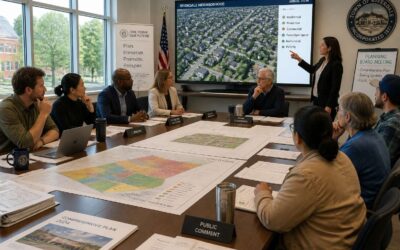
- Public venues for community consultations and field surveys
From concept to street level, a town planner orchestrates teams, negotiates with councils and communities, and guides proposals through policy and code with climate-smart care. Whether drafting a housing precinct, coordinating transit improvements, or safeguarding a landmark, this work weaves placemaking with practicality.
Common career outcomes for planners
Urban growth in South Africa is a living canvas; streets become stories when the city breathes. Today, more than half the population calls urban life home, and this reality shapes the town planner’s craft: translating vision into places people actually inhabit—buzzing precincts, quiet edge districts.
Common career outcomes unfurl along the urban spectrum: revitalising central districts, guiding growth corridors, and weaving heritage into modern living.
- Revitalise central districts and mixed-use precincts that invite daily life to spill onto the streets
- Shape climate-smart transit corridors and walkable streets that connect communities
- Safeguard heritage assets and green spaces, ensuring resilience for future generations
As a job town planner, you weave data with human stories, turning maps into places people claim as home. The work thrives on collaboration—councils, communities, architects, and environmental specialists—where every decision subtly shapes everyday life.
Daily tasks and project examples
Cities are living organisms, and the job town planner keeps the heartbeat. Today, more than half the population lives in urban areas, turning maps into streets people actually walk. As a job town planner, you translate data into places people proudly call home.
On a typical day, you juggle numbers, policy, and people. Your tools are land-use data, transport models, and a splash of diplomacy.
- site analyses and feasibility checks
- community consultations with municipal councils
- draft planning proposals and EA
Projects include transforming a brownfield in South Africa to a mixed-use hub, aligning a climate-smart transit corridor, and threading green spaces through dense streets without erasing the past.
In the end, the job town planner is storytelling with a map—data, dialogue, design, all converging into places people call home. A job town planner wears many hats.
Educational Pathways and Qualifications
Required degrees and certifications for urban planning
Cities with a future don’t happen by accident; they require planners who can sketch a transit spine on a napkin and defend it to a skeptical council. The educational path blends theory with practical credentials, shaping a disciplined craft in South Africa.
Common routes include a degree in town and regional planning, urban studies, or geography, followed by honours or a master’s in urban planning or GIS. For the aspiring job town planner, SACPLAN registration after a structured internship is a milestone.
- Bachelor in Town and Regional Planning (BTRP) or BSc in Urban Planning/Geography
- Honours or Master’s in Urban Planning, Development Studies, or GIS
- Professional SACPLAN registration after internship
Licensing and regulatory considerations in different regions
Cities are expanding at a pace that tests every council chamber, and a job town planner translates a napkin sketch into transit corridors and public spaces. Educational pathways and licensing expectations vary by region, shaping how professionals become practitioners. In South Africa, the journey blends theoretical study with hands-on internships and regional accreditation, ensuring practice aligns with policy.
Across regions, licensing approaches differ in emphasis and cadence:
- South Africa: SACPLAN governance with internship-based registration and ongoing professional requirements
- United Kingdom: RTPI-accredited routes toward chartered planner status and local planning authority practice
- North America: AICP certification with state or provincial licensing variations and mandatory continuing professional development
For the evolving field, the pathway remains rigorous and practical, demanding lifelong learning and cross-border collaboration. This yields a resilient job town planner who maps tomorrow’s streets with care.
Internships, scholarships, and mentorship opportunities
Cities are laboratories, and the job town planner is the lead designer. Jane Jacobs reminded us that “cities have the capability of providing something for everybody, only because, and only when, they are created by everybody.” South Africa then turns education into action, translating napkin sketches into transit corridors and public spaces.
Educational pathways begin with a planning or geography degree, followed by honours or a master’s for specialization. Internships tied to SACPLAN registration put theory into municipal projects; scholarships from NRF or local bursaries keep students moving.
- Internships linked to SACPLAN and live projects
- Scholarships from NRF, universities, and municipalities
- Mentorship programmes pairing graduates with seasoned planners
Mentorship and ongoing learning are lifelong. Workshops and cross-border collaborations broaden the toolkit while staying grounded in local policy. The route in South Africa fuses rigor with practical insight, shaping planners who map tomorrow’s streets with care.
Accreditation bodies and program rankings
Educational pathways to becoming a job town planner wind through planning and geography degrees, then honours or a master’s for a sharpened lens on place-making. In South Africa, these routes mingle academic rigor with municipal desire, turning curiosity about streets and spaces into disciplined practice that respects history, policy, and people.
Accreditation bodies and program rankings shape choices, ensuring degrees meet practical standards and local needs.
- SACPLAN — professional registration for planners in SA
- SAQA — qualifications authority ensuring national recognition
- CHE — higher education program accreditation and quality assurance
Top programs in South Africa blend theory with field-ready skills; for the aspiring job town planner, these curricula translate maps into humane, navigable cities across diverse communities.
Steps to transition from related fields into town planning
“Cities are the scripts for future living,” says a veteran planner. Educational pathways weave planning and geography, turning curiosity about streets into disciplined practice that respects history, policy, and people. This journey often begins with a degree in planning or geography and pauses at an honours or master’s to sharpen focus on place-making.
From related fields—architecture, environmental science, sociology—you can pivot into the town planning arena. For the aspiring job town planner, a postgraduate focus on place-making helps translate maps into humane, navigable neighborhoods that serve diverse communities.
To bridge fields, consider these steps:
- Complete foundational courses in urban design and GIS
- Earn an accredited honours or master’s in planning
- Register with SACPLAN and meet SAQA/CHE accreditation standards
Together, theory and field-ready skills help a job town planner shape inclusive, navigable cities.
Skills, Tools, and Experience for a Town Planning Role
Essential technical skills for planning analysis
In the shifting fabric of a city, the job town planner translates land into living possibility. Core skills in planning analysis fuse spatial reasoning with policy literacy, turning zoning codes into humane choices and streets into stories. South Africa’s towns demand both precision and compassion, ensuring growth respects heritage while inviting opportunity.
- Spatial analysis and data interpretation
- Policy understanding and public participation
- Stakeholder communication and negotiation
Tools harness this vision, from maps to models.
- ArcGIS or QGIS for spatial analysis
- AutoCAD Civil 3D for design integration
- Excel and Tableau for data storytelling
Experience comes from guiding assessments, public engagement, and project delivery, translating findings into policies that endure beyond reports. A portfolio showing phased development, risk mitigation, and collaborative governance signals readiness for a dynamic South African landscape.
Software tools used by planners
Mastery in planning demands more than maps; it requires a sensibility for people and places. As a job town planner, I translate zoning into humane outcomes, balancing growth with character. My skills fuse spatial reasoning with policy fluency, scenario testing, and public empathy—crafting strategies that feel inevitable rather than imposed. In South Africa, that work means weaving heritage into opportunity and guiding development with fairness.
- Geographic information systems for mapping, modeling, and urban forecasting
- Design and modeling tools that align infrastructure, streetscape, and public space
- Data storytelling platforms that translate risk and opportunity into clear narratives
Experience shows in guiding assessments, facilitating forums, and delivering plans that outlive council cycles. A portfolio that demonstrates phased development, adaptive risk management, and collaborative governance signals readiness for South Africa’s dynamic landscape.
Communication, negotiation, and stakeholder engagement
“Cities are for people, not for machines,” Jane Jacobs reminds us. In South Africa, a job town planner translates zoning into humane outcomes—balancing growth with character and fairness. This role blends maps with a steady pulse of communication, negotiation, and stakeholder engagement to keep development on track.
Skills blend persuasion with listening, clear briefing, and conflict resolution. The following capabilities matter in practice:
- Clear communication with residents, councils, and developers
- Collaborative negotiation that builds consensus across communities
Tools and experience turn plans into lived outcomes. GIS for mapping and forecasting, design tools, and storytelling platforms translate risk into clear narratives. A track record of guiding assessments, hosting forums, and delivering phased, adaptive strategies signals readiness for South Africa’s dynamic urban fabric. In SA, the job town planner blends policy fluency with people-centred process.
Data interpretation and research methods
“Cities are for people, not machines,” Jane Jacobs proclaimed, and a job town planner answers that call with human-centered poise. Mastery of clear communication, listening, and conflict resolution fuses with precise briefing and collaborative negotiation to keep development true to place. The role blends policy fluency with people-centered processes, turning zoning into humane outcomes that balance growth with character and fairness through placemaking!
Tools turn plans into lived streets. Data interpretation and rigorous research methods underpin every recommendation, while GIS for mapping and forecasting, design tools, and storytelling platforms translate risk into clear narratives.
- GIS for mapping and forecasting
- Design tools
- Storytelling platforms to translate risk into narrative
Experience marks readiness in the dynamic South African urban fabric: guiding assessments, hosting forums, and delivering phased, adaptive strategies that evolve with communities, councils, and developers—crafting spaces that endure generations.
Building a portfolio through projects and case studies
Skills for a town planning role center on people-first decision making and clear, persuasive communication. A job town planner blends listening with negotiation, turning policy into practical outcomes. Confidence in placemaking, fairness, and adaptive problem-solving keeps growth anchored to place and community values!
Tools turn plans into lived streets. A compact toolkit includes geospatial mapping and forecasting, design and visualization software, and storytelling platforms that translate risk into accessible narratives.
- Geospatial mapping and forecasting software
- Urban design and visualization tools
- Storytelling and engagement platforms
Experience is shown through a portfolio packed with projects and case studies across South Africa’s urban spectrum—municipal, townships, and private developments. It demonstrates phased, adaptive strategies, collaboration with councils, developers, and communities, and a track record of durable, inclusive places—ready for the job town planner role.
Career Advancement and Industry Trends for Town Planners
Career progression pathways and leadership roles
Cities are stories written with streets and zoning—and the job town planner is on the frontline. In South Africa, leadership in planning now means guiding multi-disciplinary teams through housing, transport networks, and climate resilience, translating policy into tangible, people-centered outcomes.
Career advancement pathways for planners often run from senior project lead to citywide strategist. Leadership roles include senior planner, principal planner, and planning director, with opportunities to liaise with municipal executives and private sector partners.
- Senior town planner leading major projects
- Principal planner overseeing districts or corridors
- Director of planning and strategic growth
Industry trends show planners rising as convener of communities and data stewards. Expect faster approvals, stronger public participation, and the integration of GIS, 3D modeling, and climate risk into master plans. For a job town planner, continued upskilling in GIS and data analytics remains essential to stay ahead of the curve.
Specializations within town planning
As Jane Jacobs reminds us, cities are stories stitched from streets and zoning—and the job town planner stands at the frontier of those tales. In South Africa, leadership in planning means guiding multi-disciplinary teams through housing, transport networks, and climate resilience, translating policy into tangible, people-centred outcomes. Career advancement stretches from senior project lead to citywide strategist, with milestones for senior planner, principal planner, and planning director, and opportunities to liaise with municipal executives and private sector partners.
Industry trends cast planners as conveners of communities and stewards of data. Expect faster approvals, stronger public participation, and the weaving of GIS, 3D modelling, and climate risk into master plans. For practitioners, ongoing upskilling in GIS and data analytics remains essential to stay ahead of the curve.
Impact of new policies and climate resilience on practice
Change is here, reshaping housing, transport, and climate action across South Africa! The job town planner sits at the crossroads of policy and people, turning new rules into streets that work for residents and small businesses. As cities embrace climate resilience, the practice demands pragmatic solutions that are affordable, implementable, and fair.
For the aspiring job town planner, career advancement follows a multi-thread trajectory—from senior project lead to citywide strategist—especially in municipalities that value cross-disciplinary teams. Industry trends position planners as conveners of communities and stewards of data, with ongoing upskilling in GIS and data analytics essential to stay ahead in a fast-changing landscape.
- Faster project approvals accompanied by stronger public participation
- Integration of GIS, 3D modelling, and climate risk into master plans
- Greater emphasis on data-driven decision making and performance metrics
Networking, professional associations, and continuing education
Cities breathe through planning, and the job town planner sits at policy’s hinge, turning rules into streets that serve residents. In South Africa, career advancement follows a multi-thread path—from senior project lead to citywide strategist—especially where cross-disciplinary teams are valued. A veteran planner insists, “Change isn’t a file on a desk; it’s the street-level impact we measure in homes and cafés.”
- Joining professional associations and regional planning societies for networking and credentials
- Mentorship programs and cross-disciplinary committees to broaden influence
- Continuing education, including GIS, climate risk, and data analytics certificates
Industry trends position planners as conveners of communities and stewards of data, with rapid upskilling in GIS, 3D modelling, and performance metrics. Networking platforms, hybrid conferences, and micro-credential programs now form the backbone of a resilient career path for the job town planner in South Africa, helping move from project-level success to citywide impact.
Global best practices and case studies
Global best practices are turning planning from isolated projects into a living city craft. For the job town planner, advancement relies on cross-disciplinary teams, participatory governance, and translating policy into streets residents can traverse daily. A veteran planner once said, “Change isn’t a file on a desk; it’s the street-level impact we measure in homes and cafés.” In South Africa, ladders rise from senior project lead to citywide strategist for those who bridge engineering, ecology, and community voices.
- Cross-disciplinary teams
- Geospatial analytics and climate risk
- Participatory budgeting and transparency
Industry trends cast planners as community conveners and data stewards. Global and local case studies show rapid upskilling in GIS, 3D modelling, and performance metrics, shortening approvals and boosting resident trust. For South Africa, the job town planner becomes a hub of collaboration and authentic change.



0 Comments