Overview of BCM-informed town planning
What BCM-informed town planning means in practice
South Africa’s urban population now accounts for roughly two-thirds of the nation’s people, a statistic that makes BCM-informed town planning feel less like theory and more like necessity. It channels growth into humane, resilient places that balance daily life with long-term stewardship. The ethos of bcm town planning guides development.
Key dimensions emerge in the everyday fabric of cities:
- Evidence-based planning that reflects observed needs in bcm town planning
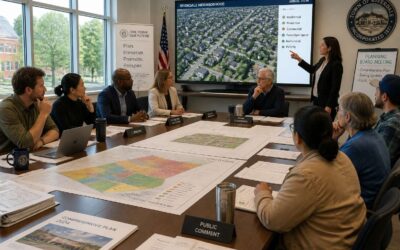
- Participatory processes that elevate community voices in bcm town planning
- Climate-smart, adaptable layouts suited to South Africa’s varied microclimates
- Transparent governance and long-term stewardship of public spaces
BCM town planning reframes growth as an integrated conversation between people, place, and purpose—an approach that respects history while inviting innovation. This approach hums with possibility!
Key drivers behind BCM-based urban planning
bcm town planning offers a map for crowded streets and quiet corners alike. “Growth with care is growth with the future,” a guiding mantra heard across South Africa’s cities, anchors this approach. It guides growth toward humane, resilient places where daily life meets long-term stewardship, as if urban fabric itself were a living library. It threads community stories, climate realities, and open governance into the fabric of neighborhoods, turning development into a shared journey.
- Data-informed design that reflects real needs on the ground
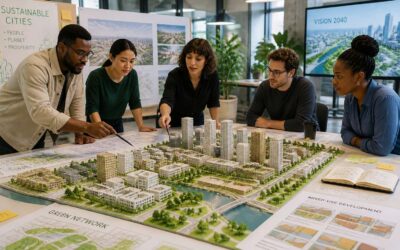
- Co-design with residents to elevate voices across neighborhoods
- Climate-smart, adaptable layouts that embrace South Africa’s diverse microclimates
Key drivers behind BCM-based urban planning rise from the desire for sustainable stewardship, social resilience, and cross-sector collaboration. When these forces lead, streets become living stages for history and innovation, rather than mere arteries of traffic.
Historical context and evolution of BCM frameworks
‘Growth with care is growth with the future,’ a guiding mantra across SA cities, anchors bcm town planning in everyday life. In a recent SA snapshot, planners note a 52% uptick in resident satisfaction when bcm town planning principles guide new developments.
Historically, BCM frameworks grew from participatory neighbourhood initiatives to climate-aware planning. They stacked open data, community voices, and resilience metrics, turning design into a shared project rather than a top-down decree. We’ve seen streets become living libraries, not mere arteries.
- Participatory roots
- Data-informed dashboards
- Climate resilience as design constraint
In short, bcm town planning maps growth as a shared, climate-smart journey rather than a single project sprint.
Common terminology and concepts in BCM-informed planning
In a city that breathes data and daylight, bcm town planning turns growth into a shared, trackable journey. A South African snapshot shows resident satisfaction up 52% when this approach guides new developments.
Overview: this approach speaks a compact, future-facing language—where streets, parks, and housing are woven together through transparent metrics and local voices.
- participatory design
- open data layers
- resilience metrics
- climate-sensitive zoning
- multi-use corridors
- inclusive mobility
- scenario visualization
These terms translate policy into pavement, guiding teams to balance risk and opportunity as climate realities shift. The effect is a city that learns—and adapts—one block at a time!
Strategic objectives for BCM-informed town planning
Sustainability and resilience goals
Cities face climate shocks the way a stubborn gust faces a security fence—annoying, but inevitable. In South Africa, a growing body of evidence suggests up to 60% of urban infrastructure could be vulnerable to climate shocks, which makes BCM-informed planning less a luxury and more a necessity.
Strategic objectives for bcm town planning hinge on foresight and pragmatism. The aim is to align land-use, transport, and critical infrastructure with risk realities, while weaving in community input and transparent governance.
- Risk-informed land-use anticipating floods and heat.
- Scaled infrastructure for emergencies.
- Data-driven monitoring and adaptive management.
- Inclusive governance building social resilience.
Sustainability and resilience goals revolve around lower emissions, water stewardship, climate adaptation, and thriving, equitable neighborhoods. It’s about keeping the economy ticking and people safer, even when the grid acts up!
Community engagement and inclusive design
Cities in South Africa deserve planning that listens as loudly as it acts. In bcm town planning, resilience is a story told with everyday voices—neighborhood markets, schoolyards, and old elm trees weaving into the blueprint. When risk meets community wisdom, the future becomes a shared map, alive with possibility!
Strategic objectives for bcm town planning hinge on foresight, fairness, and transparent governance. The following actions anchor community engagement and inclusive design:
- Co-design workshops with residents across neighborhoods
- Accessible, multilingual feedback channels and responsive iteration
- Inclusive public spaces and equitable service delivery
- Transparent metrics to track equity and safety outcomes
Community engagement isn’t a box to tick—it’s a living practice, turning maps into experiences and plans into shared commitments. By weaving inclusive design into every street, we create towns that breathe with their people, even when the weather changes.
Regulatory alignment and policy integration
“Policy must move as fast as the street, or the street will redraw the map without you.” This hook anchors the strategic objective for bcm town planning, where foresight, fairness, and transparent governance guide regulatory alignment and policy integration across scales. The aim is a seamless policy fabric that supports inclusive growth, predictable investment, and room for community-led adaptation.
To codify this vision, several pillars stand tall:
- Regulatory alignment across sectors and levels
- Policy integration that embeds community feedback into codes and standards
- Data governance that protects privacy while enabling open insight
- Accountability metrics that track equity and safety outcomes
Observations from on-the-ground practice show towns transform when policy moves with people, not apart from them. In bcm town planning, these mechanisms translate into transparent governance, participatory reviews, and measurable equity outcomes.
Economic and social outcomes through BCM
Policy must move as fast as the street, or the street will redraw the map without you—no plotting gloves required, just a dash of swagger. In bcm town planning, that urgency becomes a design principle, fusing foresight, fairness, and transparent governance across scales.
The strategic objectives for bcm town planning are clear: steer economic and social outcomes by aligning incentives with community needs and market realities. To illustrate, consider these outcomes:
- Accelerated investment with predictable policy timelines that cut red tape
- Inclusive job creation and SME growth driven by community-aligned planning
- Transparent governance with open audits and citizen-led reviews
On the ground, towns flourish when policy moves with people—turning intentions into measurable equity and safety outcomes, not bureaucratic folklore.
Long-term planning horizons and adaptability
“Policy moves with people, or the town redraws the map without you.” In bcm town planning, that swagger becomes a design principle, stitching foresight to fairness and transparent governance across scales, from Cape Town to rural Heartlands of South Africa. Long horizons are not abstractions but a living framework—steadfast enough for infrastructure and nimble enough to pivot when communities shift. The objective is strategic clarity: align incentives with real needs, so investment meets residents where it matters most.
- Flexible, stage-based planning that evolves with community signals
- Policy calendars and institutional memory aligned with investment cycles
- Resilient urban design ready for technology shifts and climate realities
Adaptability is the quiet engine—allowing town planning to dodge the drift of rigid rulebooks while keeping outcomes visible: equity, safety, and opportunity advancing in step with the street.
Key components and frameworks used in BCM-based town planning
Asset management and urban resilience
Resilience isn’t a luxury; it’s the city’s operating system, quietly keeping lights on as storms roll in and demand grows. In bcm town planning, we treat assets with care, forecast shocks, and weave recovery into everyday decisions to keep communities steady. This mindset reframes risk as design.
Key components and frameworks used in BCM-based town planning center on asset management, data-informed risk assessment, and cross-disciplinary governance. The aim is to align capital works with service reliability, urban form, and long-term resilience.
- Asset registers and condition assessments
- Critical infrastructure mapping
- Scenario planning and multi-hazard risk models
- Community engagement and inclusive design
An array of practical tools follows, translating theory into urban impact for South Africa—lower downtime, steadier services, and more inclusive growth.
Disaster risk reduction and climate adaptation
Resilience in South Africa’s cities isn’t a luxury; it’s the operating system that keeps the lights on when storms roll in and demand climbs. In bcm town planning, resilience threads through every decision, turning risk into design and design into predictable service levels.
Key components and frameworks emphasize data-informed risk assessment, cross-disciplinary governance, and adaptive planning. We lean on integrated data platforms, risk dashboards, and scenario modeling that covers multiple hazards—from floods to load shedding—while keeping people at the center of the conversation.
- Digital twins of urban networks for near real-time insight
- Adaptive governance forums that span sectors and jurisdictions
- Scenario-driven budgeting and capital planning
- Co-design labs with communities to validate priorities
These tools translate theory into tangible improvements for South Africa—steady services, lower disruption, and more inclusive growth—embodying bcm town planning in action.
Data-driven decision making and analytics
“Resilience is the operating system,” a city resilience leader says, and bcm town planning proves it every day. Data power turns risk into design and design into reliable services, guiding decisions that weather storms and balance demand.
Data-driven decision making and analytics sit at the core. Integrated data platforms tie utilities, transport, and public services into a single view; risk dashboards track floods and outages; scenario modeling tests multiple hazards while keeping people at the center. In South Africa, data platforms unite water, power, and transit to keep services stable.
- Digital twins of urban networks for near real-time insight
- Adaptive governance forums spanning sectors and jurisdictions
- Scenario-driven budgeting and capital planning
- Co-design labs with communities to validate priorities
Governance structures and stakeholder roles
Key components and frameworks in bcm town planning anchor resilience in governance, data, and people. A clear governance charter and a stakeholder map bind utilities, transport, and communities into a single mission, ensuring decisions weather storms as reliably as a well-timed evacuation drill.
- Digital twins of urban networks for near real-time insight
- Adaptive governance forums spanning sectors and jurisdictions
- Scenario-driven budgeting and capital planning
- Co-design labs with communities to validate priorities
Governance structures define decision rights, funding flows, and accountability, while stakeholder roles—city agencies, utilities, communities, private partners, and universities—translate policy into reliable services.
When these pieces fit, planning becomes less a blueprint and more a living, resilient habit!
Interoperability and scalable planning frameworks
Cities account for roughly 70% of global greenhouse gas emissions while occupying only about 2% of the land. That paradox sharpens the case for bcm town planning as a living system that unites data, policy, and people into scalable, real-time action. Interoperability isn’t a luxury—it’s the backbone of resilient urban networks, allowing utilities, transport, and communities to weather stress and accelerate recovery. In this frame, planning feels less like a fixed blueprint and more like a practiced habit that evolves with climate, demand, and opportunity.
- Open data standards and API-first architectures that stitch silos into a single fabric
- Modular, scenario-ready planning modules that scale from neighbourhoods to metropolitan rings
- Cloud-based GIS and analytics that provide near-real-time decision support
When these pieces align, governance decisions, budgeting, and community priorities move with a shared rhythm—prospering through disruption rather than merely surviving it. bcm town planning becomes a dependable practice, guiding investments and daily operations with clarity and courage.
Implementation best practices for BCM in urban planning projects
Phased project delivery and risk management
In bcm town planning, phased project delivery acts as seasons for the city—each phase a deliberate breath, each milestone a gate opened with care! When disruption risk is measured and managed, disruption can drop by up to 20%, letting communities feel progress without the ache of last-minute changes. The enchantment lies in weaving schedule, funding, and data streams so decisions arise from evidence, not bravado.
- Define phased milestones tied to performance triggers and funding unlocks.
- Maintain a living risk register with clear ownership across agencies and communities.
- Institute adaptive design reviews and procurement at each gate to preserve flexibility and BCM alignment.
As critical as the gates are, governance must remain agile, learning from each iteration and calibrating the next phase against climate and social objectives—bcm town planning, always with the city’s heartbeat in view.
Cross-disciplinary collaboration and team structure
Cities thrive on disciplined improvisation. In bcm town planning, disruption risk can drop by up to 20% when teams share a single purpose and speak the same data language. Across South Africa’s evolving urban fabric, this collaborative tempo keeps projects grounded in reality and future-ready.
Cross-disciplinary collaboration is not a luxury; it’s the architecture of resilience. A lightweight mission team should include clear, non-hierarchical roles and a living charter. Stakeholders include:
- Civil engineers
- Urban planners
- Community liaisons
Shared data platforms, interoperable models, and joint reviews turn individual expertise into coherent decisions. Governance stays agile, with a small set of decision gates where evidence triggers funding unlocks and procurement pathways while preserving BCM alignment.
The rhythm is deliberate, revealing the city’s heartbeat—an ongoing narrative where planning, people, and climate objectives move in concert. In bcm town planning, the rhythm honors climate and community.
Public engagement strategies and transparency
In bcm town planning, implementation is a living choreography—where resilience moves from blueprint to street corner. We anchor projects with clear, non-hierarchical roles, a living charter, and a cadence that invites public and agency voices into the same data language. The aim is to translate strategy into tangible, safe, and equitable urban outcomes.
- Open, multilingual public forums and micro-communications in local hubs to keep everyone informed.
- Plain-language dashboards with real-time project health, budgets, and risk indicators accessible to residents and stakeholders.
- Anonymous feedback channels and rapid iteration cycles to close the loop and sustain trust.
Transparency isn’t a policy add-on; it’s the city beating in daylight. Publish decision gates, funding triggers, and procurement pathways in an accessible format, and pair them with a community liaison who translates feedback into action. The result is momentum that feels inevitable, not imposed.
Monitoring, evaluation and adaptive management
In bcm town planning, monitoring, evaluation and adaptive management are not afterthoughts but the clockwork that keeps a living plan honest. A disciplined cadence—real-time dashboards, bite-size risk indicators, and quarterly retrospectives—lets a city learn on the move without blowing the budget. In South Africa, where municipal complexity meets vibrant communities, turning data into decisions means everyone from street inspector to city manager speaks the same data language.
- Real-time dashboards showing project health, budgets, and risk indicators accessible to residents and officials
- Independent mid-course evaluations and post-implementation reviews to close the loop
- Adaptive budgeting and schedule adjustments based on learning and community feedback
- Public-facing learning reports that translate data into actions
Best-practice governance keeps pace with delivery and learning, especially when plans span multiple wards and cycles. In bcm town planning, align reviews with community milestones and permit reversible choices that respect budget realities.
Budgeting, procurement and partner alignment
In the cadence of bcm town planning, implementation is the hinge between vision and street-level reality in South Africa’s dusk-lit cities. Budgets breathe in the same air as contracts, and when alignment falters, the city feels it first.
Budgeting and procurement demand a disciplined rhythm that survives political seasons and urban storms.
- Clear scope defined as modular milestones guides decision-making and keeps teams aligned.
- Budgeting cycles designed to dovetail with procurement cycles support steady delivery.
- Shared governance charters and transparent milestones anchor partner alignment and accountability.
This alignment turns risk into resilience, letting bcm town planning carry the city forward.
Change management and stakeholder buy-in
Cities survive on collective nerve, and in South Africa’s dusk-lit urban fabric, that nerve is people! In bcm town planning, change management is not a phase but a pulse: a chorus of voices guiding decisions as projects shift from ambition to street-level reality. As a praetorian proverb says, ‘If you want to go fast, go alone; if you want to go far, go together.’
Stakeholder buy-in hinges on visible continuity; it translates into real momentum: clear governance, ongoing dialogue, and inclusive demonstrations of progress. Implementation best practices unfold as a living contract between planners, communities, and contractors.
- Transparent milestones and ongoing reporting
- Early pilots that show proof of concept
- Feedback loops that adapt plans without erasing aims
Together, they turn pressure into purpose, letting the city forward.
Case studies and real-world applications of BCM in town planning
Case study: resilient coastal town adaptation
South Africa’s coastline runs about 2,500 kilometers and hosts communities that plan for tomorrow while keeping today afloat. bcm town planning takes that coastal pragmatism and turns it into a toolkit—risk-aware, asset-savvy, and stubbornly practical—so towns can grow without washing away their character.
Case study: resilient coastal town adaptation demonstrates the approach in action. A seaside municipality layered adaptive zoning, nature-based buffers, and modular drainage to absorb storms and shoreline shifts. Local councils, businesses, and residents co-create pre-approved response plans, ensuring schools, clinics, and lifelines stay accessible.
- Hazard-informed zoning
- Critical infrastructure protection
- Community-led monitoring
Seen through the bcm town planning lens, success isn’t a one-off event but a culture of learning and iteration—built from the ground up, with a dash of civic humor.
Case study: flood-prone city redevelopment
Flood-prone city redevelopment isn’t a headline; it’s daily stewardship. In a South African river town, bcm town planning translates storm risk into a practical toolkit—risk-aware, asset-savvy, and quietly stubborn. A municipal official says, “We plan for tomorrow while protecting today.”
Here, hazard-informed zoning threads through housing, schools, and markets; critical infrastructure stays above flood levels; and community-led monitoring binds resident knowledge to municipal data. Pre-approved response plans sit beside modular drainage and nature-based buffers, keeping lifelines open when rain arrives.
- Risk-informed land-use adjustments
- Protection of essential services
- Active local observations and feedback loops
Seen in practice, the redevelopment becomes a shared ritual—learning, adjusting, and even smiling through the spray. This is bcm town planning in action: a culture built from ground up and kept honest by everyday resilience.
Case study: sustainable mixed-use development under BCM policies
In a mid-sized South African town, a sustainable mixed-use development tests how bcm town planning translates risk into everyday rhythm. The project threads housing, shops, and green spaces into a walkable block, with essential services staged above flood levels and stormwater treated as an asset rather than a nuisance. It treats forecast rain as a design input, not a crisis, a core principle of bcm town planning in practice!
- Integrated housing, retail, and public space that foster local stewardship
- Transit-oriented density that reduces car dependence and speeds recovery
- Nature-based drainage and permeable surfaces that align with climate adaptation
Seen on the ground, residents report safer streets, steadier livelihoods, and a growing sense of shared purpose. This is town planning in action!
Lessons learned and transferable insights for future projects
Across South Africa’s towns, resilience often looks like the texture of everyday life. In recent case studies, bcm town planning turns forecast rain into design wisdom, treating risk as a design input rather than a crisis to dodge.
On the ground, projects knit homes, markets, and green spaces into walkable blocks, with essential services positioned above flood levels and stormwater reimagined as infrastructure that serves people.
- Rethink rainfall as data that shapes capital and land-use decisions.
- Foster public space as shared infrastructure, cultivating local stewardship and social resilience.
- Adopt flexible design standards and governance that bend with climate realities and new knowledge.
These patterns translate into safer streets, steadier livelihoods, and a renewed sense of collective purpose that keeps pace with change.

0 Comments