Foundations of Urban Planning Studies
Definition, aims, and scope
Cities are living organisms, and a town planning study acts as their anatomy. In South Africa, where coastal towns meet crowded inner cities, urban futures hinge on how spaces are imagined and connected. Jane Jacobs reminds us that “cities have the capability of providing something for everybody, only because, and only when, they are created by everybody.” This truth anchors planning in real streets and shared spaces!
Foundations of urban planning studies blend geography, sociology, and design to ask how places breathe, move, and endure growth. They define the scope and set aims that shape policy and everyday life.
- Guide sustainable, inclusive growth that respects scarce resources.
- Increase accessibility and liveability across diverse communities.
- Protect heritage and ecological assets while welcoming change.
Core components of the study
Cities are living systems, and a town planning study treats their anatomy with care. In South Africa, coastal towns meet crowded inner cities, and urban futures hinge on how spaces are imagined and connected. As Jane Jacobs reminds us, “cities have the capability of providing something for everybody, only because, and only when, they are created by everybody!”
Foundations of urban planning studies pull geography, sociology, and design into a practical toolkit. Core components of the study include:
- Spatial analysis and data mapping
- Connectivity, mobility, and access
- Heritage, ecology, and social equity
Together, these elements guide sustainable, inclusive growth that respects scarce resources and strengthens liveability across diverse communities.
Key stakeholders and benefits
Jane Jacobs was right: “cities have the capability of providing something for everybody, only because, and only when, they are created by everybody!” That inclusive chorus anchors foundations of urban planning studies in practice. In South Africa, where coastal towns meet crowded inner cities, a well-timed town planning study translates diverse needs into spaces that work for work, transport, and weekend life.
Foundations pull geography, sociology, and design into a practical toolkit; they turn theory into street-level pragmatism. Key stakeholders become co-authors of the city’s future: residents, municipal planners, local businesses, transport operators, teachers, and civil-society groups—all with a voice in shaping safer, greener, more inclusive spaces.
- Local communities and residents
- Municipal planners and urban design teams
- Businesses, developers, and transport operators
- Researchers, academics, and civil-society advocates
Benefits ripple through streets and budgets alike: smarter connectivity, heritage protection, and social equity coalesce into liveable places that spark local pride and practical outcomes.
Terminology, acronyms, and classifications
Foundations of urban planning studies unfurl like a mythic atlas, where terminology acts as compass and map. In the town planning study, the lexicon threads land-use, zoning, density, and movement into a shared language that keeps conversations productive and precise.
Acronyms interlace strategy and practice: GIS for geographic insight; SPLUMA as the legal spine; EIA for environmental checks; IDP to connect community needs with municipal visions.
Within these foundations, classifications tidy the terrain:
- Land-use classifications
- Density and intensity frameworks
- Mobility and transport typologies
- Heritage, environment, and urban overlays
Together, these terms shape the narrative of how spaces become functional, inclusive, and resilient for South Africa’s coastal towns and bustling inner cities.
Comparisons with related planning disciplines
Cities are stories etched in asphalt, and the town planning study is the pen that keeps the plot moving. It threads imagination with pragmatism, turning coastal charm and urban grit into livable patterns.
Compared with related planning disciplines, the town planning study operates at a city-scale tempo: it weighs how spaces are used, how people travel, and community needs against laws and budgets.
- Urban design and landscape-scale thinking
- Regional planning and cross-municipal coordination
- Transport planning and street networks
- Environmental and heritage considerations
Ultimately, the study blends theory with on-the-ground listening; it invites communities to see how spaces become inclusive, resilient, and functional. I’ve seen neighborhoods reshape themselves when residents share their morning rituals. In South Africa’s coast and inner cities, this approach helps unlock vibrant, walkable precincts.
Methodologies and Data for Planning Investigations
Research design and study types
Urban growth in South Africa’s metros grows roughly 3% annually, pressing planners to craft smarter maps and steadier policies. A well-executed town planning study treats tempo as data, turning bustle into evidence and insight—without surrendering nuance or charm.
Methodologies fuse quantitative rigor with qualitative texture. GIS mapping, trend analysis, and scenario modeling meet stakeholder dialogues and participatory workshops, weaving a robust evidentiary fabric. Data streams include:
- Census and demographic data
- Satellite and aerial imagery
- Field surveys and site observations
- Policy documents and zoning records
- Public service indicators
Study designs vary: cross-sectional analyses for current conditions, longitudinal tracing over time, comparative precinct studies, and scenario planning for futures.
Ethical guardrails—transparency, data quality, and inclusive engagement—keep findings credible within South Africa’s urban tapestry.
Data sources: census, GIS, land use records
A single map can reveal a city’s pulse. In a town planning study, methodologies blend numbers with nuance, turning daily bustle into evidence while preserving character. Urban growth, housing pressures, and service networks all feed into a disciplined analysis that guides smarter maps and steadier policies in South Africa’s cities.
- Census data
- GIS datasets
- Land use records
Data streams like census data, GIS datasets, and land use records are more than files; they are conversations with communities about where people live, work, and move. When these sources converge with planning records, the result is clearer trajectories and credible scenarios that withstand public scrutiny. That clarity supports honest negotiations and resilient futures.
Analytical techniques: GIS, spatial analysis, forecasting
Across South Africa’s fastest-growing towns, 70% of future needs—housing, transit, services—are forecast through spatial models, not guesswork. A town planning study blends numbers with nuance, turning daily bustle into evidence while preserving character. In practice, analytical techniques such as GIS, spatial analysis, and forecasting illuminate how neighborhoods evolve and where service networks must stretch.
Key techniques include:
- GIS workflows that map land use, demographics, and infrastructure layers
- Spatial analysis to identify hotspots, corridors, and access gaps
- Forecasting approaches such as scenario planning and demand modeling
Data streams are conversations about where people live, work, and move. When these streams align with planning records, trajectories become clearer and decisions more credible, shaping resilient futures in South Africa’s cities.
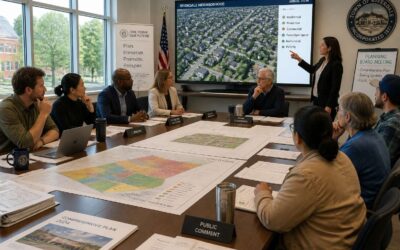
Public participation and stakeholder engagement
Across South Africa’s fastest-growing towns, 70% of future needs—housing, transit, services—are forecast through spatial models, not guesswork. Methodologies and data for planning investigations fuse quantitative rigor with human storytelling, turning maps into places people recognize. Public participation and stakeholder engagement shape the process, inviting residents, business owners, and councillors to co-create outcomes.
- Community workshops that surface lived experience
- Stakeholder interviews with utilities, schools, and local businesses
- Participatory mapping and visioning sessions in community hubs
In this collaborative cadence, a town planning study uses dialogue to ground numbers in daily life. Data streams—surveys, town hall comments, and local knowledge—meld with official records to reveal credible trajectories and ensure new development respects neighbourhood character.
Ethics, bias, and validation
Ethical rigor anchors methodologies in planning investigations. A town planning study blends quantitative methods with qualitative checks, ensuring models stay accountable to real lives rather than abstract trends. Validation steps—independent reviews, sensitivity analyses, and triangulation—keep projections credible while guarding against overconfidence. Ethical data handling governs consent, privacy, and equitable representation throughout the process.
- Informed consent for fieldwork and transparent participation processes.
- Privacy by design, anonymization, and secure data management.
- Bias awareness across sources, with independent audits to challenge assumptions.
- Open validation protocols and thorough documentation for reproducibility.
When these guardrails hold, the study becomes a robust instrument for governance, balancing ambition with neighbourhood character and everyday life!
Regulatory and Policy Context
Legal framework: zoning, ordinances, and approvals
Cities breathe when zoning tells a clear story. In South Africa, regulatory clarity can trim months from approvals and unlock sustainable growth. ‘The map should tell a vision people can live by,’ a veteran planner says.
Legal framework guides what can be built, where, and how dense. Zoning codes, ordinances, and development approvals shape the town planning study, ensuring land use aligns with transport, housing, and heritage.
Key elements emerge in practice: zoning maps, land-use tables, and setback rules.
- Zoning districts and permissible uses
- Development approvals and timelines
- Building codes and environmental overlays
Public participation and clear documentation keep the process honest, balancing investor confidence with community character.
Policy instruments and planning controls
In urban South Africa, more than half of development projects stall at the approval stage because policy fragmentation creates a maze. A robust regulatory backdrop offers a straight path for the town planning study and keeps communities and investors aligned.
Policy instruments guide approvals and development timelines. In practice, consider:
- Spatial Development Frameworks (SDF) and Integrated Development Plans (IDP) guiding land-use priorities
- Environmental and heritage overlays, building codes, and climate resilience standards
- Transit and infrastructure plans that shape access, density, and visual character
Planning controls turn ambition into deliverables: development control plans, building performance standards, and environmental impact thresholds. Clear documentation and transparent appeal routes boost investor confidence while safeguarding community identity. In the town planning study, these controls are read as a coherent framework for decisions, not as red tape.
Governance, institutions, and interagency coordination
The heartbeat of a town planning study lies in governance that moves with clarity. In South Africa, more than half of development projects stall at the approval stage because policy fragmentation creates a labyrinth. When the regulatory backdrop is coherent, ideas ride a straight path from concept to curb cut.
National, provincial, and municipal layers must speak with one voice; institutions and interagency coordination are the gears that keep this machine turning. Planning offices, environmental authorities, and heritage bodies, working in concert, unlock efficiencies, reduce red tape, and guard community identity within a shared decision rhythm.
- National policy alignment and funding signals
- Provincial planning authorities and environmental ministries
- Municipal planning departments and public participation units
When these elements align, the town planning study reveals a living framework rather than a maze, inviting investors and communities to move forward together.
Environmental and social safeguards
In South Africa, development proposals stall at the approvals gate, with policy fragmentation turning the process into a maze! A well-anchored regulatory and policy context, however, can turn bold ideas into curb-ready realities. In a thoughtful town planning study, national policy alignment and funding signals meet provincial planning authorities and municipal planning departments, allowing ideas to glide rather than grind to a halt.
Environmental and social safeguards form the ethical spine of this work. Key elements include:
- Environmental Impact Assessments that are timely, participatory, and science-based
- Social safeguards ensuring inclusive benefits and displacement mitigation
- Heritage and cultural protections preserving community identity
- Transparent public participation processes that shape outcomes
When these elements align, developers and communities walk the same corridor—predictable, accountable, and durable. This is the essence of a well-crafted study: a governance-aware, safeguards-led blueprint rather than a bureaucratic labyrinth.
Funding, incentives, and partnership models
“Policy should be a map, not a maze,” a veteran planner whispers. In a town planning study, funding signals and regulatory clarity light a path through the maze, turning bold ambitions into curb-ready realities. South Africa’s growth hinges on how policy and money align.
At the regulatory core, stable multi-year funding, incentive programs, and public–private partnership scaffolds turn approvals into impact. Consider partnership models that drive delivery:
- Public-private partnerships that share risk and expertise
- Municipal–private joint ventures for precinct-scale development
- Community land trusts and participatory budgeting for inclusive outcomes
- Development finance institutions acting as catalytic funders
Clear rules, predictable signals, and interagency coordination make governance feel like a corridor rather than a cul-de-sac. When these elements harmonise, planning becomes a living, capital-ready framework rather than a bureaucratic labyrinth.
Practical Output and Impact
Deliverables: master plans, reports, and maps
Across South Africa’s urban tapestry, a town planning study acts as compass and canvas. A recent survey suggests 62% of growth in major metropoles is steered by formal planning outcomes—proof that clarity is the engine of possibility. Practical Output and Impact Deliverables translate vision into action:
- Master plans that chart growth alongside housing, transport, and public spaces
- Reports that distill stakeholder input into clear policy directions
- Geospatial maps that reveal land-use patterns and infrastructure needs
These outputs do more than document intent; they empower communities to see themselves in the cities they share. When a town planning study yields master plans, reports, and maps, it sparks investment, guides approvals, and nourishes equitable growth. The end result is a city that feels engineered with care—where every corridor, square, and alley supports the lived stories of its people. In South Africa’s towns, such deliverables become the scaffolding of a humane urban evolution—tangible, navigable, and resilient.
Case studies and best practices
In South Africa’s evolving urban tapestry, a well-timed town planning study can tilt growth toward livable, inclusive outcomes. A recent survey shows 62% of growth in major metropoles is steered by formal planning—proof that clarity is the engine of possibility. Case studies from Cape Town, Johannesburg, and Durban reveal best practices in action:
- Early, inclusive public participation to capture lived realities
- Integrated transport and housing strategies that avoid zoning silos
- Transparent decision-making with accessible outputs and dashboards
Practical outputs emerge as catalysts for investment, approvals, and resilient neighborhoods. Case studies underscore iterative forecasting, cross-agency collaboration, and continuous stakeholder feedback as the core levers. When such planning aligns futures with streets and services, the city becomes a living organism—nurtured, navigable, and just for all its inhabitants.
Communication: visual storytelling and dashboards
Visual storytelling is the spine of practical outputs in a town planning study. Dashboards translate complex data—land use, transport, population growth, and service gaps—into readable narratives for councils, developers, and residents. When futures unfold as maps, time-lapse scenarios, and color-coded indicators, planning becomes accessible rather than opaque. Clarity is the engine of possibility, turning data into decisions that shape streets, spaces, and everyday life for all.
- Live dashboards with geo-tagged indicators for urban form, housing, transport
- Narrative captions that explain shifts and connect data to streets in everyday terms
- Accessible formats and multilingual options to include all communities
These outputs become catalysts for investment, approvals, and resilient neighborhoods, ensuring planning conversations reach every ear.
Performance metrics and monitoring plans
Urban futures hinge on what gets measured today. In the town planning study, practical outputs become our living compass—bridging maps with streets and dashboards with everyday decisions. A robust monitoring plan keeps momentum honest: we turn targets into quarterly signals and assign accountability so councils, developers, and residents feel the pulse of progress and risk.
- KPIs: housing units delivered, time to permit, public transport access, green space per capita
- Cadence: dashboards updated quarterly, with real-time geo-tagged indicators where available
- Governance: clearly defined responsibilities and escalation paths for deviations
Impact is measured not by numbers alone but by neighborhoods that breathe easier. In South Africa, this town planning study informs investment and approvals, turning data into streets and spaces communities can trust. The city’s pulse grows stronger when dashboards illuminate progress and risks alike.
Implementation pathways and risk management
“Cities are futures you can walk through,” a seasoned urban planner often says, and in the town planning study the future breathes through practical outputs. When data turns into legible streets, dashboards, and decisions, communities feel the pulse of possibility—not distant plans but daily progress.
Implementation pathways emerge as bridges between maps and lived experience. The town planning study seeds adaptable pilots, fosters cross‑sector collaboration, and turns insights into spaces communities can trust. Risk management sits alongside ambition, with transparent signals, contingencies, and escalation channels ensuring pressure points are spotted early.
- Data governance and transparency across agencies
- Community engagement cycles that shape evolving designs
- Adaptive phasing with learning loops to reduce surprises
In South Africa, these practical outputs translate into investment clarity and approvals, helping neighborhoods breathe easier as dashboards illuminate progress and risks alike.



0 Comments