Role of Town Planning Professionals in Kuala Lumpur
Key Responsibilities in Kuala Lumpur’s Urban Development
In Kuala Lumpur, the city unfolds like a living map, and town planning professionals script its next act. A veteran planner once said, “Cities are sculptures of movement,” and I hear that truth guiding my craft as I shape streets, parks, and skylines. The town planner kuala lumpur blends heritage with bold, people-centered design, balancing density with generous green spaces and human-scale corridors.
Core responsibilities in Kuala Lumpur’s urban development include:
- Master-planning alignment with policy
- Zoning, land-use regulation, density management
- Public realm design that invites walking
- Transportation integration from transit to roads
- Climate resilience and sustainable design
- Stakeholder engagement for inclusive outcomes
For readers in South Africa, these principles translate into accessible, walkable neighborhoods that welcome diverse communities and vibrant streetscapes.
Agency Collaboration with City Hall and State Authorities
In Kuala Lumpur, planning professionals navigate approvals, policy, and public input, partnering with Kuala Lumpur City Hall (DBKL) and state authorities to steer growth that respects heritage while embracing change. town planner kuala lumpur—translating long-term visions into workable projects, from street grids that invite walking to parks that anchor communities and transit links that knit neighborhoods together—embodies the practical core of this collaboration.
- Policy alignment and approvals
- Public realm standards
- Transit and utilities coordination
These collaborations hinge on shared data, mutual trust, and timely sign-offs that keep projects moving.
Viewed from a South African lens, the ascent of walkable districts is a reminder that governance shapes everyday life.
Regulatory Compliance and Zoning Standards in Malaysia
In Kuala Lumpur’s map of futures, zoning is the quiet architecture of trust. “Zoning is not boxes; it’s the choreography of daily life,” an elder planner once said. The town planner kuala lumpur translates policy into street grids, envelope controls, and heritage-preserving spaces, ensuring that Malaysia’s regulatory framework becomes livable, walkable urbanity. This is not mere paperwork; it is an orchestration of standards, approvals, and public sentiment that keeps momentum without erasing character.
In practice, regulatory compliance and zoning standards in Malaysia demand navigational skill across acts, local by-laws, and development orders. The following elements shape daily work:
- Translating national planning policy into site-specific requirements
- Balancing density, land use, and building forms within approved envelopes
- Integrating heritage protection with streetscape and transit planning
For readers in South Africa, governance shaping everyday life resonates as streets become stages where people move and memories endure.
Interdisciplinary Coordination with Architects, Engineers, and Developers
Cities click into place when planning has a pulse. A study finds walkability climbs when cross-disciplinary planning thrives. As a town planner kuala lumpur, I translate policy into street grids, envelope controls, and heritage corridors, turning regulatory talk into tangible streetscapes. It’s not paperwork; it’s the choreography that keeps daily life moving while preserving character.
Interdisciplinary coordination with architects, engineers, and developers is the secret sauce.
- Architects turn vision into massing that respects envelopes and rhythm
- Engineers align drainage, utilities, and transit with safe streets
- Developers balance market realities with public goals, ensuring viability
Together we steer projects from concept to corner café, keeping Kuala Lumpur’s city fabric livable and legible for locals and visitors alike. For readers in South Africa, this teamwork makes streets feel alive.
Geographic and Demographic Context for Urban Planning in Kuala Lumpur
City Center, Districts, and Suburban Corridors
Vibrant energy gathers where three corridors converge, shaping Kuala Lumpur’s urban tapestry. More than half of growth concentrates along the city center to suburban belts, where transport routes thread neighborhoods into a single, living map. For the town planner kuala lumpur, this geographic texture—dense cores, mid-rise districts, and expanding edges—defines where housing, green spaces, and services can flourish in harmony, not competition!
To picture the population mosaic, consider these corridor profiles:
- City Center: walkable, mixed-use blocks, high daytime vitality.
- Districts: diversified housing and cultural amenities fueling steady demand.
- Suburban Corridors: transit-oriented expansions, edge-of-city communities, and new schools.
These patterns guide the choreography of housing, transport, and public realm, ensuring Kuala Lumpur’s core, districts, and edges breathe with intention and grace.
Population Growth, Density, and Housing Demand
Kuala Lumpur unfolds like a finely traced tapestry, where density is a virtue, not a hazard. More than half of growth threads from the city center toward the suburban belts, bending the map into a living choreography. For the town planner kuala lumpur, this geographic texture—dense cores, mid-rise districts, expanding edges—is the tempo of housing, transport, and public life.
- Transit-oriented expansions align with rail arteries, turning mobility into momentum.
- Mid-rise districts sustain housing demand through blended living, work, and culture.
- Edge-of-city pockets attract new schools, parks, and services, weaving a wider living map.
For South African readers, these patterns offer a lens on urban resilience and inclusive growth. In Kuala Lumpur, housing supply, transport networks, and green public realm breathe together when the city treats density as a shared destiny, not a battleground—an ethos the town planner kuala lumpur embodies daily.
Transit Patterns and Mobility Trends
Kuala Lumpur moves like a living lattice, with dense cores and expanding belts shaping how people live and travel. This geographic and demographic texture guides urban planning toward smart density and connected neighborhoods. For South African readers, the pattern signals resilience and inclusive growth in action—the town planner kuala lumpur knows this well.
Transit patterns drive mobility: rail arteries become momentum, mid-rise districts fuse living, work, and culture, and edges sprout schools and parks to widen the living map.
- Rail corridors as mobility spine
- Transit-oriented development with mixed-use precincts
- Pedestrian-first streets and bike networks
Demographics shift with migration and household changes, demanding a choreography that keeps green public realm alive amid density. For the town planner kuala lumpur, this is daily wonder.
Environmental and Climate Considerations in Planning
Kuala Lumpur electrifies its geography: a living lattice where density becomes dialogue, not drama. Growth centers curve around rail corridors, shaded streets, and green pockets. For the town planner kuala lumpur, this map is a responsibility as much as a promise!
The Klang Valley sits in a humid tropical belt, with heavy rainfall and flood-prone plains. River corridors, floodplains, and groundwater dynamics shape where neighborhoods can safely breathe and grow. South African readers will recognize echoes of climate resilience in Kuala Lumpur’s approach.
Demographic shifts—urban migration, changing household structures, and cultural diversity—demand housing that blends tenure options, parks within reach, and robust infrastructure to weather changing light and storms.
- Heat mitigation through shaded streets and canopies
- Flood resilience via resilient drainage and water capture
- Green corridors linking homes, schools, and workplaces
Environmental and climate considerations in planning for Kuala Lumpur call for weaving climate into daily life, so planners keep green public realm alive amid density.
Transit-Oriented Development and Infrastructure Strategy
Public Transit Integration: LRT, MRT, and Bus Networks
Transit is the city’s heartbeat, and Kuala Lumpur hums with it. More than two million daily trips hinge on a shared spine of LRT, MRT, and bus networks, weaving neighborhoods into a single, steady current. In the eyes of town planner kuala lumpur, stations rise like beacons, guiding workers, shoppers, and dreamers through a living map that breathes with the city’s rhythm.
Transit-Oriented Development reorients growth toward hubs, placing homes, offices, and services within a five- to ten-minute stroll of rail. An infrastructure strategy that unifies LRT, MRT, and feeder buses—with safe crossings, bike lanes, and climate-smart design—extends access, curbs congestion, and invites diverse communities to share the street. South African readers will recognize this cadence as a universal chord of resilient, walkable cities.
Roads, Interchanges, and Traffic Management in a Growing Capital
In a growing capital, every curb counts. A well-timed shift toward transit-oriented growth can trim commutes and stitch neighborhoods into a single living map. When streets breathe with people, shops prosper and evenings feel safer, lighter, and more human.
TOD reframes roads and interchanges as shared spaces. Corridors become legible threads; interchanges, safe nodes. Traffic management—smart signals, coordinated timing, and protected crossings—keeps buses moving, cyclists thriving, and pedestrians crossing with confidence.
- Pedestrian-priority corridors and protected bike lanes
- Climate-smart streets with shade, permeable surfaces, rain gardens
- Integrated feeder services and real-time transfer information
For South Africa’s readers, the rhythm resonates. town planner kuala lumpur pursues growth with humanity, turning density into dignity and transit into everyday possibility.
Sustainable Infrastructure Funding and Public-Private Partnerships
Moonlight on the rail canopy, and Kuala Lumpur breathes differently—TOD makes streets into living rooms where buses glide and lives connect. The town planner kuala lumpur imagines corridors as legible threads, financing that respects culture and climate, turning density into dignity. A city isn’t built; it is performed in the minutes between trains, and this is where infrastructure strategy takes its most human bow.
Sustainable Infrastructure Funding and Public-Private Partnerships become a duet, not a duel. Where public duty and private prudence meet, long-horizon investments flourish, guided by transparent frameworks and shared accountability. This approach shapes finance that rides the rhythm of growth while shielding communities from excess debt—and invites South African readers to envision transit as daily companionship.
- Value-capture strategies that align land uplift with project costs for public budgets
- Performance-based PPPs that reward reliability, not just capital
- Lessons for town planner kuala lumpur in value-capture and PPP alignment
Resilience Planning: Adaptation to Climate Risks
In a city where monsoon shadows lengthen each decade, Kuala Lumpur’s transit spine must endure more than traffic: it must tolerate climate shocks. A resilient TOD framework shows that stations—more like living rooms along rails—can absorb downpours and urban heat without losing momentum.
Transit-Oriented Development and Infrastructure Strategy Resilience Planning weave together land use and weather wisdom. For town planner kuala lumpur, climate adaptation is a narrative thread—elevated walkways shed light, permeable pavements drink rain, and green corridors pull cool air through dense districts.
- Passive cooling and shaded transit nodes
- Permeable surfaces and water-sensitive urban design
- Elevation-aware precincts that separate flood risks from daily life
Resilience in transit becomes a shared lyric—a future where corridors breathe with rain and shade, inviting curious minds from everywhere, including South Africa, to listen.
Cultural Heritage and Green Infrastructure Coexistence
One station can spark a five-block living room of activity. For town planner kuala lumpur, TOD is a living design—where cultural memory walks beside cooling shade and rain gardens, turning daily rides into urban wonder.
Cultural heritage and green infrastructure must coexist, not compete. Historic streetscapes, mosques, and colonial-era shophouses are braided into elevated walkways and permeable plazas, preserving identity while inviting everyday exchange.
- Heritage-conscious alignment of sightlines
- Permeable surfaces and water features
- Green corridors and shade trees
These decisions ripple beyond the city, guiding readers in South Africa toward humane street life and climate-smart precincts.
Sustainable and Smart City Initiatives in Kuala Lumpur
Data-Driven Planning with Smart City Technologies
KL’s streets hum with hidden data, and a spark of magic lights the way: in pilot districts, energy use has fallen by up to 12% as smart meters and building dashboards wake the city to efficiency.
As a town planner kuala lumpur, I watch data-driven planning turn maps into living networks. Smart city technologies weave real-time signals from air quality sensors, traffic sensors, and digital twins of neighborhoods to forecast heat, crowding, and green space needs with lyrical precision. I love watching it breathe!
- IoT sensor networks monitor energy, transport, and air quality
- Digital twins run scenario tests for new districts
- Open data portals spur private-public collaboration
- Citizen engagement platforms influence policy with local voices
These tools turn complex urban rhythms into navigable stories, aligning long-term visions with the cadence of daily life in Kuala Lumpur’s skyline while keeping privacy and equity at the heart of planning, a rhythm many South African readers will recognize; as a town planner kuala lumpur would say.
Green Space, Urban Forests, and Biodiversity
KL’s heat island problem is real. In peak sun, urban canopies can cool streets by up to 5°C. This punchy fact anchors a city that blends skyline ambition with shade. town planner kuala lumpur views green space not as luxury but as essential infrastructure!
Green spaces, urban forests, and biodiversity corridors anchor KL’s future. Here are core moves that naturalize the city without sacrificing density:
- Urban forests expanding canopy cover
- Ecological corridors linking parks and neighborhoods
- Native species and pollinator plantings
- Green roofs and vertical gardens
These measures invite community access and weave biodiversity into daily life, a rhythm South African readers will recognize in the push for climate-smart towns.
Affordable Housing and Social Equity
“Housing is infrastructure!” declares Kuala Lumpur’s planning ethos, a sentence that reverberates through the city’s streets and skylines. Sustainable and smart city initiatives reframe affordability as design, not concession.
The town planner kuala lumpur prioritizes social equity by weaving affordable homes into transit hubs, using public land for mixed-use blocks, and enforcing energy standards that meet or exceed norms. This approach reduces displacement and expands opportunity while keeping density intact.
Key levers include the following:
- Transit-oriented development pairing affordable housing with reliable LRT and MRT access
- Inclusionary zoning and land banking to support social housing with community engagement
- Green retrofits, rooftop solar, and low-carbon materials across aging neighborhoods
For South African readers, KL’s climate-smart town planning shows that housing, mobility, and green design can align without sacrificing density or affordability.
Regulatory Frameworks for Sustainable Development
KL turns growth into a design problem, not a drama. Regulators frame sustainable development with blueprints, not buzzwords, blending density with green standards and long-term resilience. It’s urbanism that stops mistakes before they start.
Regulatory frameworks hinge on Kuala Lumpur’s Structure Plan, green-building standards, and transparent zoning, backed by environmental safeguards and proactive public consultation. Approvals flow with accountability, but community voices shape every block and corridor.
- Green Building Index and energy performance standards
- Biodiversity and urban forest targets in planning approvals
- Mandatory environmental impact assessments and inclusive stakeholder engagement
This approach resonates with South African readers seeking dense, climate-smart cities; town planner kuala lumpur demonstrates how to balance green design with social equity.
Community Engagement and Participatory Planning
In Kuala Lumpur, sustainable and smart city initiatives are conversations that thread through streets and skylines, not abstract reports. Participation can cut revision cycles by up to 25%, turning design mistakes into learning moments. For the town planner kuala lumpur, this is about people, not pixels.
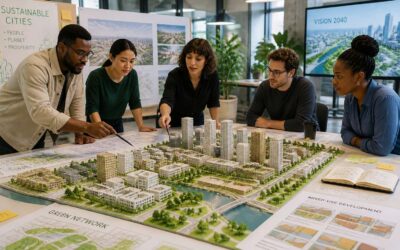
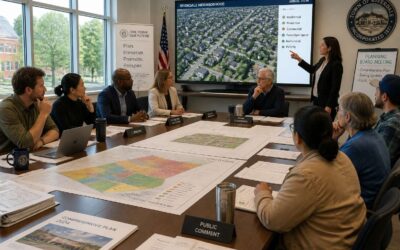
Community engagement happens at street-level forums, digital canvases, and co-design labs where residents shape energy use, shade, and micro-greening of corridors. Transparent dashboards let neighbors watch progress, while inclusive outreach invites voices from diverse neighborhoods, languages, and ages — a moral contract as much as a policy tool, resonating with South African readers seeking dense, climate-smart cities.
- Neighborhood co-design charrettes that map sun, shade, and pedestrian routes
- Digital town halls and mobile feedback apps for every corner of the city
- Open data portals and real-time project dashboards for accountability

0 Comments